


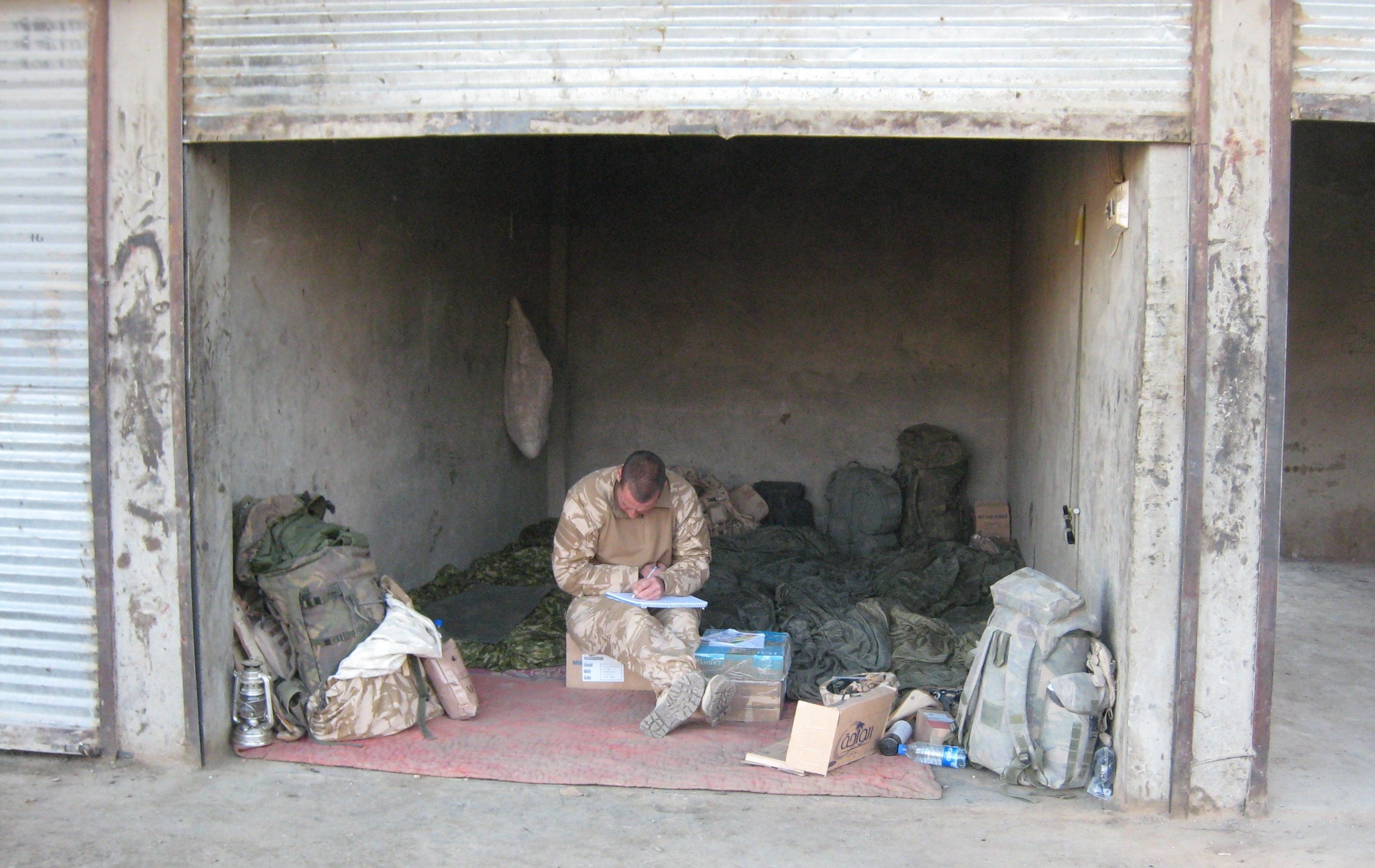
Night vision goggles turn helicopters in the starlit sky into performers in the air. In the silence of the dark in Iraq or Afghanistan the sight of a lumbering Chinooks or nimble Lynx carrying ammunition, water or people is a feeling of relief that only those who have found themselves a long way from base will truly understand. But that feeling of salvation as the rotors beat through the air is getting quieter. Since the end of the Cold War we have cut our military lifters by about half. We now fly fewer helicopters than at any point in modern memory.
At sea the picture is even starker. Over the same decades we have reduced the Royal Navy’s surface fleet to roughly a quarter of its former size, leaving us with the smallest force since before the First World War. It is no wonder the First Sea Lord, General Gwyn Jenkins, warned this week that the advantage we have held in the North Atlantic since 1945 is now at risk. Russian submarine and underwater activity has surged. Incursions into British waters are rising and Moscow is investing heavily in the very capabilities designed to tilt the balance. As Jenkins put it, we are still holding on, but not by much.
That warning should have stopped the national conversation in its tracks. It did not. Britain has drifted into weakness while the strategic environment has changed around us. The United States has now spelled that out openly. Its new National Security Strategy is not another bureaucratic document. It is a blunt admission that the assumptions which shaped the last eighty years no longer hold. European security is no longer an American led project. Washington will focus on its own defence and on the Indo Pacific. Europe must take responsibility for its own continent.
We cannot pretend to be surprised. President Dwight Eisenhower warned in the 1950s that Europe could not rely on American protection forever, and every president since has repeated the message. But Europe chose the peace dividend. Britain did the same. Less on defence, more on health and welfare, with the United States absorbing the risk. That period is finished. Washington has made clear that it will no longer subsidise European prosperity through American defence spending. Britain must relearn that security is something we provide for ourselves, not something we expect others to gift to us and this cannot be answered by spreadsheets.
The usual response when a government is caught unprepared is to announce a percentage. Two percent, three percent, even five percent sound bold and create the impression of action. But percentages do not generate capability. They only generate headlines. No target fixes the fact that Britain cannot produce an armoured vehicle that works. No target fixes the collapse in ammunition stockpiles. Ajax is more than a failed programme. It is a symbol of what happens when money is poured into a system without reform. It is also a warning that increasing the budget without changing procurement will only deepen dependence on foreign suppliers. That is precisely the vulnerability Washington is now highlighting.

The Strategic Defence Review understood all of this. It is a serious piece of work. It recognises the rise of cheap mass drones, the vulnerability of our infrastructure, the need for sovereign industrial production and the central importance of national resilience. It sets the right direction. But without resources to act now it has already been turned into a wish list.
Treasury decisions have pushed almost every major commitment beyond the next election which means beyond the authority of those making the promises today. This has drained the SDR of force through no fault of its own. Defence planning cannot rest on budgets that depend on a future parliament. Forces cannot reshape themselves on funding that is theoretical. Industry cannot expand supply chains or build factories on the basis of hope. Civil resilience cannot be rebuilt on promises lodged somewhere over the horizon. But this review drafted for immediate action has been trapped in financial limbo and turned from preparation to warning.
The shift in Washington makes this delay even more dangerous. The new American strategy is not a gentle request for Europeans to do more. It is a declaration of a new strategic reality. The United States will remain a partner but it will not be the automatic first responder to European crises. It will act where its interests require and will not act where they do not. Influence follows effort. If we want a seat at the table, we must pay for it.
The shift of rhetoric in Washington is that the United States will remain a partner but will not be the automatic first responder to European crises.
Ukraine has shown the consequences of ignoring this. Kyiv is fighting with extraordinary courage but its war effort has been shaped by decisions taken in foreign capitals. Ukrainian forces depend on external satellite networks, intelligence feeds and weapons production. When Congress delayed aid, operations slowed. When allies hesitated, ammunition was rationed. When restrictions were placed on systems, strategy changed. When negotiations began, European complaints about exclusion revealed the truth. Sovereignty exists only for those able to put the effort into meaning it.
This experience makes the transformation of warfare even more urgent. The relationship between cost and capability has collapsed. A drone costing a few thousand pounds can neutralise armour costing millions. Commercial satellites deliver information once available only to superpowers. Autonomous systems built from civilian components can challenge formations that once defined military strength. Victory belongs not to the state with the most expensive equipment but to the state that can adapt and produce at speed.
Britain cannot meet this challenge with procurement processes built for a different era. Ajax shows what happens when a decade is lost in a system that chases perfection and delivers nothing. Without structural reform any increase in defence spending risks being swallowed by legacy programmes or foreign suppliers rather than creating the sovereign capacity we need.
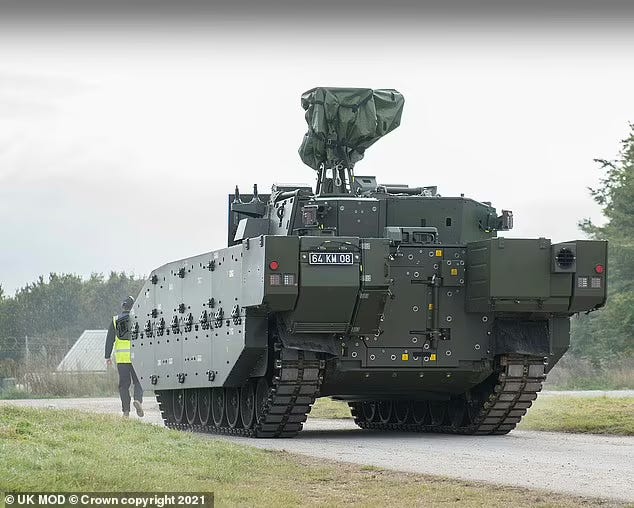
The solution to the defence procurement processes isn’t just more money; it requires a radical reform of the system, starting with regulation.
The SDR is right to call for new munitions factories, larger missile production lines, stronger supply chains and a focus on resilience. But funding delayed is capability denied. Factories cannot be built later. Missile stockpiles cannot be replenished in the middle of a crisis. Resilience cannot be left to a future parliament. Modern conflict punishes those who plan according to fiscal calendars not the enemy’s demands.
This begins in the civilian domain. Ports, power stations, hospitals, data centres and undersea cables are the first targets of adversaries. A country that cannot keep its essential systems running cannot defend itself. Resilience is not an extra. It is the foundation of national defence. The SDR recognises this. The Treasury has not matched it.
The American shift means Britain must be able to act even if allied support arrives later or in smaller quantities. Cooperation will remain essential. Dependency cannot. A resilient state works with allies while retaining the capacity to protect itself.
That demands sovereign industrial power. Britain needs industrial facilities that operate every day, not only in moments of crisis. It needs domestic production of drones, munitions and sensors. It needs procurement that moves in months instead of years. It needs supply chains that can withstand pressure. Foreign contractors should add to our capacity, not replace it.
None of this can wait. A strategy that begins in the next parliament fails in this one. If Britain delays it will hit its spending targets while failing in the purpose of defence which is to guarantee security. It will buy the past instead of shaping the future.
Ukraine shows the cost of failure. Russia’s threats make clear what we must do.
We face a more dangerous world than at any time since the Cold War. Russia has ended the peace dividend as the American umbrella closes and warfare has changed. The SDR provides a blueprint for a coherent response but without the decision to act its just words. What’s missing is the immediate investment, rapid procurement, industrial revival and real national resilience.
As the First Sea Lord warned in his blunt tones: a strategy that starts tomorrow, fails today.
You are 100% right to flag that this goes beyond money. And you are right to say procurement needs reform.
But I don't think the SDR did address the problems in defence at a fundamental level at all. Nor did the National Security Strategy. Both rest on the failed assumption that “clean power” will meet our industrial needs. We are in a uniquely bad position because we have HIGHEST INDUSTRIAL ELECTRICITY PRICES IN THE DEVELOPED WORLD. This is downstream from domestic policy. Two decades of energy consensus in Westminster.
High energy costs caused by renewable energy and Net Zero are leading to deindustrialisation. We have 500 years of historical data from Paul Kennedy that shows how scale, innovation and speed (ie productive force) win wars. It will be no different in our own era.
John Bew and others have argued the same. See his excellent essay in the New Statesman from last Xmas in the new era of Machinepolitik.
That means we needs lots of dense and reliable energy. The opposite of renewables, which are thermodynamically inferior to fossil fuels and nuclear.
Net Zero is not just catering our heavy industry which provide the foundation for an effective war fighting machine, but they impact our ability to produce things higher up the value chain like drones.
We are measuring losses in months in our industrial base and no one in Westminster seems to have noticed or willing to act - other than to address symptoms with more subsidies that fail to address the root cause.
For more information read Rian Whitton’s report for the Prosperity Institute. https://www.prosperity.com/media-publications/destroying-the-foundations/