


The Iran war has revealed the reality of the British way. It has shown us to be legalistic, ill-equipped and unprepared. It has revealed our dependencies, not our partnerships, the risks we’ve hidden, not the resilience we’ve built, and, perhaps most gravely of all, our casual confidence of a return to normal when the disrupted alliances and energy flows will do anything but.
We have come to a moment like William Stead’s in 1884, when he had to ask: what is the truth about the Navy? What followed was the realisation that the maritime power that sustained empire had rotted in port. The Naval Defence Act of 1889 was the fix.
We are now at a similar moment. In the past two months, let’s just look at what has happened. Allies for the past century have wondered if our own legal constraints mean we can be relied on, not just to plan operations from our bases, but to fly defensive sorties from theirs.
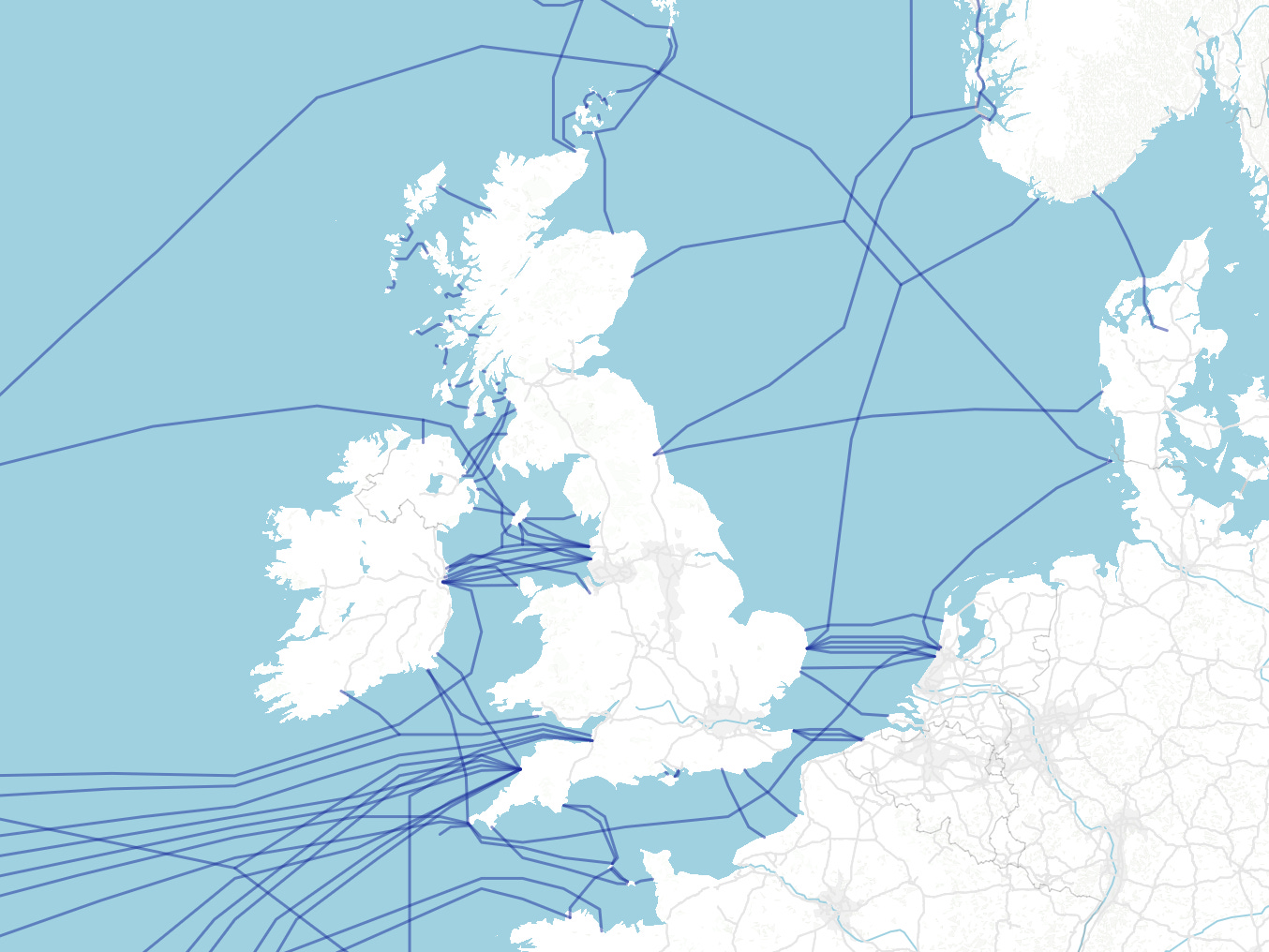
Our sovereign bases have come under attack and been defended not by British forces, but French. And the Defence Secretary has confirmed that Russian submarines spent much of March and April mapping our undersea cables, while the best we could say was that we had watched them do it.
We have ceased to be a serious military nation. If we fail to use this moment to realise the challenges we face, the next wake up call may cost us very dear.
Many of us have known the truth about our defences for some time. The facts are not hidden and many of the gaps have been visible for decades, not just years.
But today, with the threats to our allies in the Gulf, and to the communication cables around our coast, the risks are not theoretical. They have already arrived.
Without changing our approach we won’t be stocking up on self-built security, we’ll be panic buying whatever we can at the highest prices when the urgency demands immediate action. If there is one lesson from the Covid pandemic, it’s that behaving like that will cost for generations to come.
That’s the reality of where we are now.
Visible decline
British defence, under governments of every political stripe over three decades, has deteriorated steadily, in plain sight.
It is the end-product of a series of democratic choices whose cumulative effect was not so much concealed from public view as simply unquestioned within its gaze.
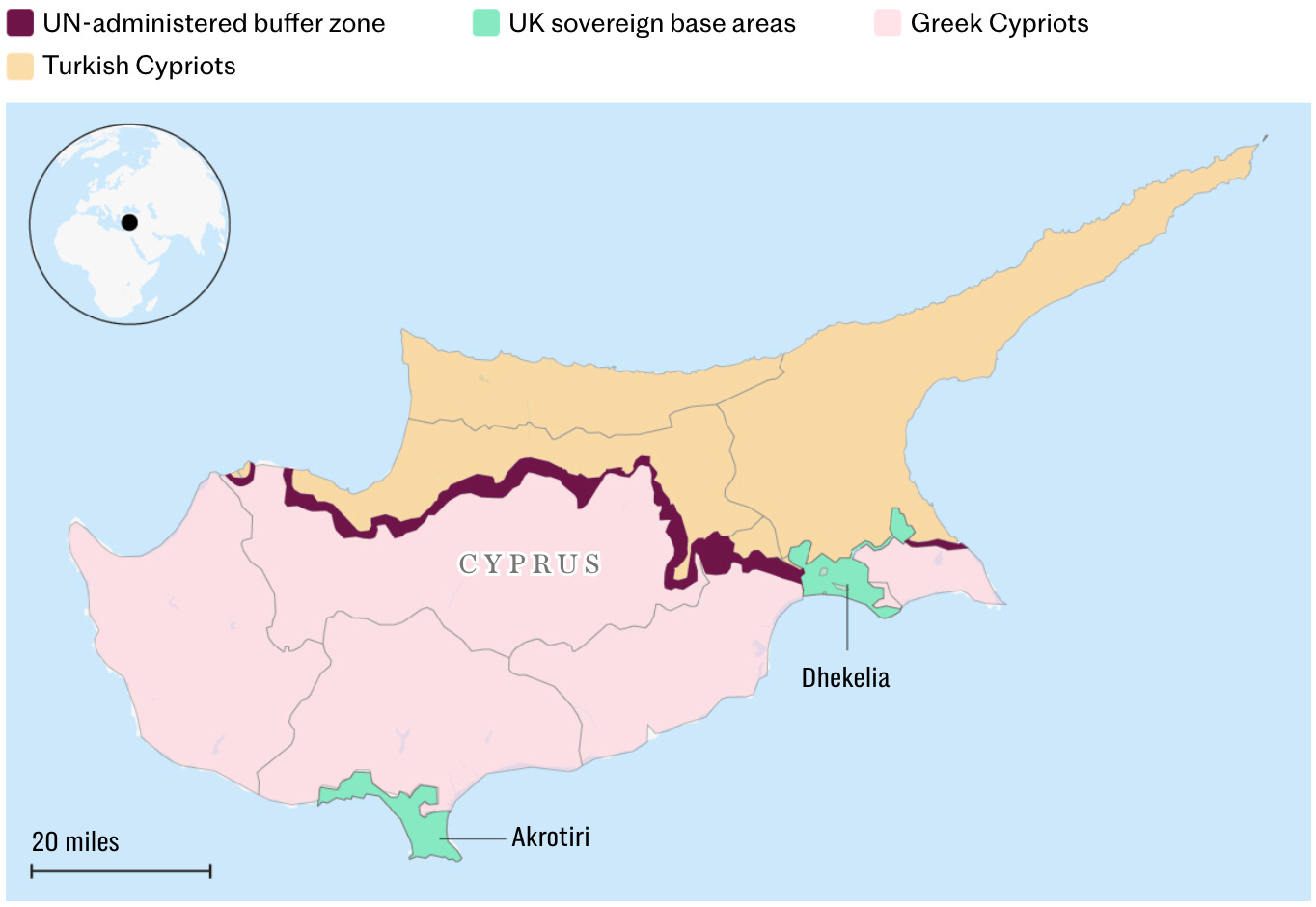
Just look at the past several months. Our military bases in Cyprus have come under rocket attack, but the anti-missile batteries deployed to defend British sovereign territory were not British. They were French. So that’s French crews and French equipment defending British soil.
When the Iran campaign began, there was no Royal Navy vessel on station in the Gulf after the admirals were forced to choose between protecting our home waters and our vital interests.
And as the drones struck cities now home to thousands of Britons, the Royal Air Force was limited in its ability to defend our interests and our allies, despite the UK maintaining four air bases on the Gulf littoral.
Set that against 1982, when a Royal Navy task force capable of retaking the Falkland Islands at the other end of the Earth was assembled in a weekend. That Britain and this Britain can hardly be called the same country.
The accumulated evidence compels a diagnosis, and that diagnosis, however unwelcome it will be, is the necessary precondition of any serious prescription. That cure, a grand strategy backed by a clear-eyed understanding of how things really are, is what we have failed to achieve because the defence reviews have lacked the resources they required
For three decades, the country has been describing a Britain that no longer exists. Before it can decide what to do next, it must be prepared to see clearly what it has become.
This is about more than kit. The revelations published in The Telegraph in recent days confirm what many of us had long feared: the legal culture that grew up around operations in Iraq and Afghanistan was not, in its most aggressive expressions, a neutral application of principle.
It was the instrumentalisation of law, the deliberate use of legal process not to defend justice but to pursue a narrow political agenda, at the direct expense of the men and women ordered into combat by the British state.
Soldiers are paralysed as both action and inaction can leave them liable to prosecution or danger. Commanders have their confidence eroded, reducing speed of action and changing tangibly what a force can accomplish and what it cannot.
The government asks why they can’t hit recruitment targets for our Armed Forces. They ask why half of our young people say they would never fight for their country.
Well, they should start by looking at their Attorney General, Lord Hermer. His position is completely untenable. He has prioritised – by choice, if also by ignorance – the interests of agents of the IRGC.
Even if his action was unwitting, his belief that those who pursued prosecution of those we ask to protect us are more worthy of praise than the soldiers who risk their lives demonstrates a failure of judgment and raises real questions about the advice he offers the government.
Those who lie about our troops encourage others to kill them. That’s treason. No minister, no citizen, should praise that.
It’s no accident then that pride in Britain’s history has fallen. The reason isn’t lost in the enigmatic mystery of our national character, it’s what a country looks like when it has spent 30 years telling itself that defence is someone else’s problem.
Since the end of the Cold War, we have slashed the defence budget and failed to re-equip for the world as it is, instead of how we wished it were.
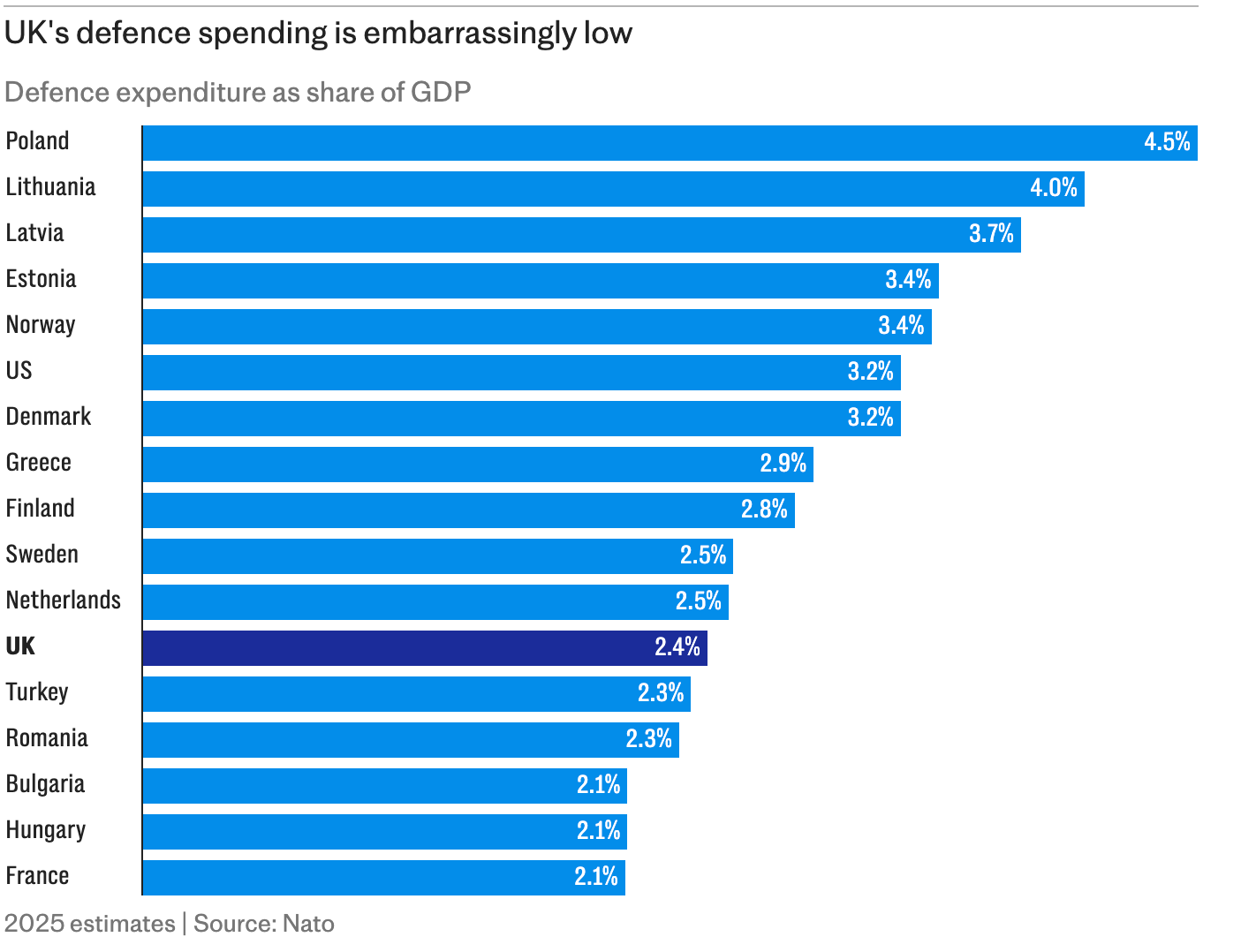
And for all our talk of hitting 2.5 per cent, and now boasting of the largest increase in the defence budget, we are simply not being honest. Ever since the nuclear deterrent was included in the defence budget in 2010 and the pensions included in 2016, we are really spending about 1.7 per cent. That’s closer to the much derided Spaniards than the prepared Poles.
Shrinking Royal Navy
The reality of decline is visible in every service. Let’s start with the Royal Navy.
Despite months of warning and the biggest military build-up since the Iraq operations, not one of Britain’s six purpose-built vessels capable of air defence was in position and ready for the start of the Iran War.
Three were stuck in Portsmouth for engineering work. One had spent more time in refit than at sea. Another was in maintenance. The last one remaining was dragged from her dry dock to be dispatched leaving the region without a British naval presence for 17 days as the war began.
The last one remaining was dragged from her dry dock to be dispatched leaving the region without a British naval presence for 17 days as the war began. That’s no surprise. We commissioned 12, built six, with missiles for five and parts for four. Our Dutch auction of capability is coming home to roost.
Britain’s two aircraft carriers, HMS Queen Elizabeth and HMS Prince of Wales, are extraordinary ships built for a combined cost of approximately £7bn – but that is without the cost of the planes.
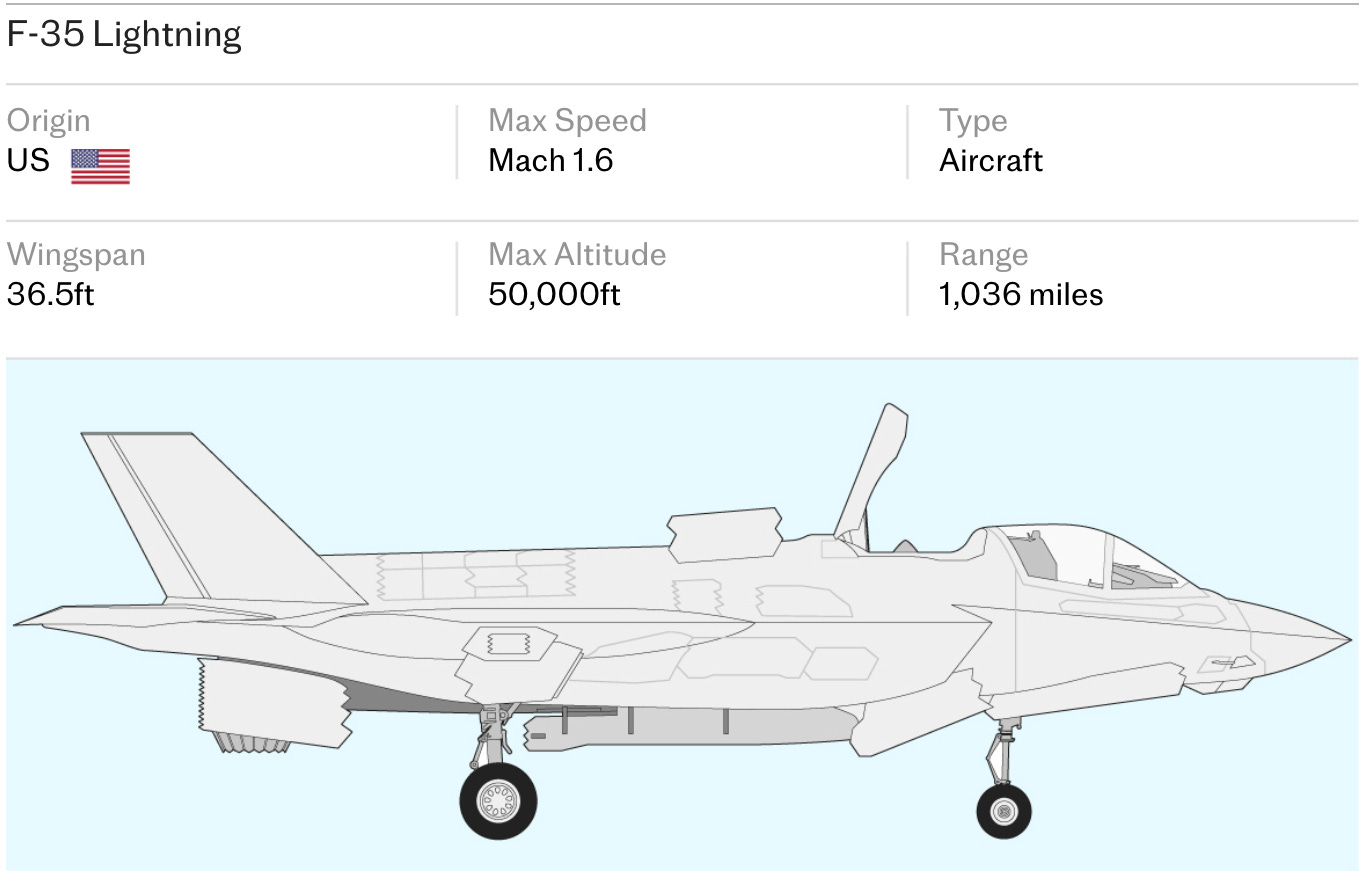
On its first major deployment, HMS Queen Elizabeth didn’t carry a full British fast-jet air wing. The United States Marine Corps provided the F-35Bs.
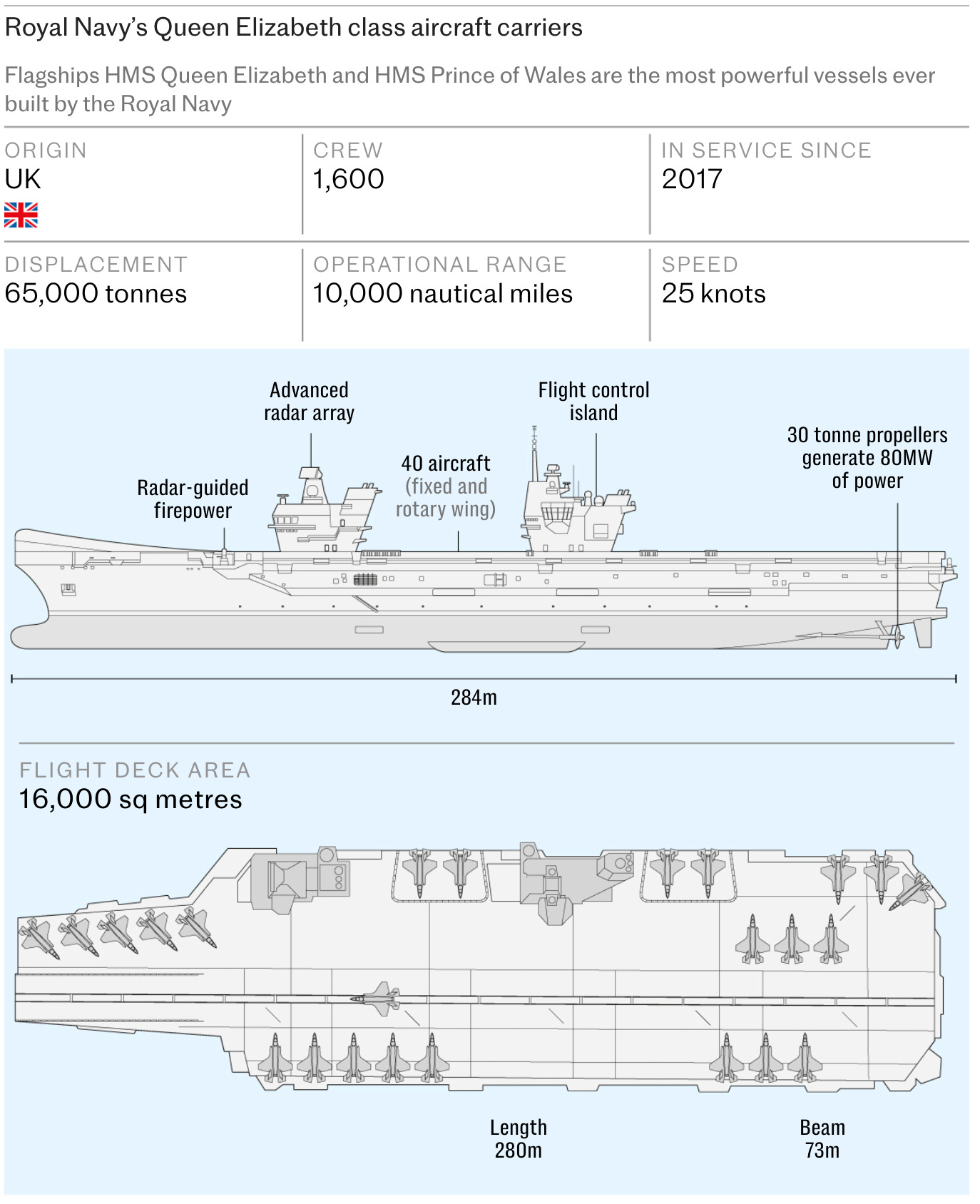
The escort ships (without which a strike group cannot operate), were also provided by the US, as well as… the Dutch. In other words, the platform exists but without our allies it is a stage without the full cast.
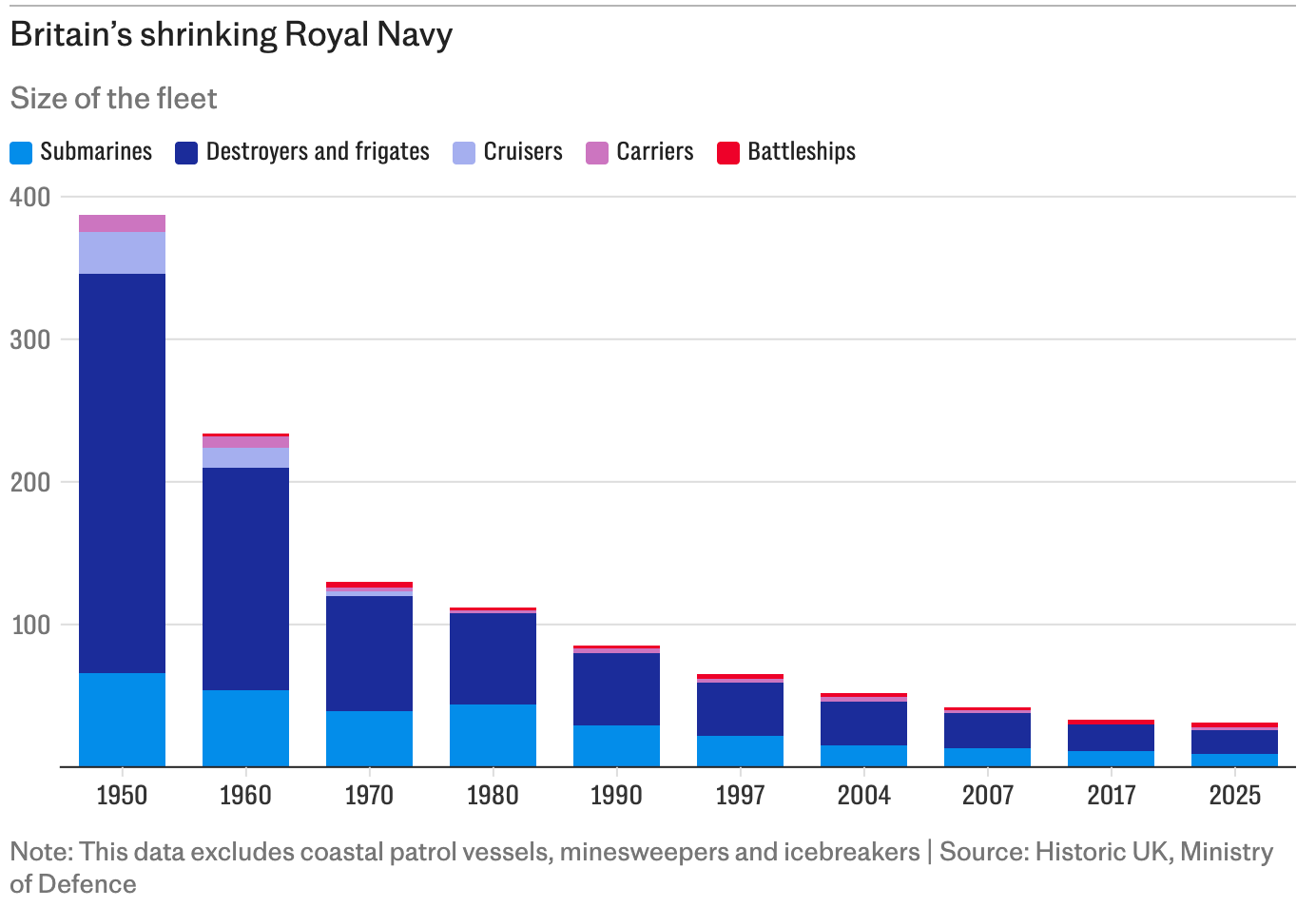
The escort picture is starker. In 1982, Admiral Leach had a task force assembled capable of retaking the Falkland Islands in a weekend. A force of 127 ships, 43 of them Royal Navy warships, set sail to restate Britain’s commitment to our place in the world.
Today the Royal Navy has 13 frigates and destroyers overall, down from 59 in 1982.
The standing task list – the work we must do just to maintain forward presence, protect the carriers, and deter our enemies from cutting our energy and communications cables, leaving us cold and silent – requires more hulls than exist.
Every First Sea Lord and Chief of the Naval Staff has known this for years but since the American campaign against Iran began in February it became clear to the world: not a single Royal Navy vessel has been in the Gulf. Not one. Two months on, that hasn’t changed.
Dependency does not bring strength
Surely, though, the Army is in better shape, given it was needed to fight in Iraq and Afghanistan? No.
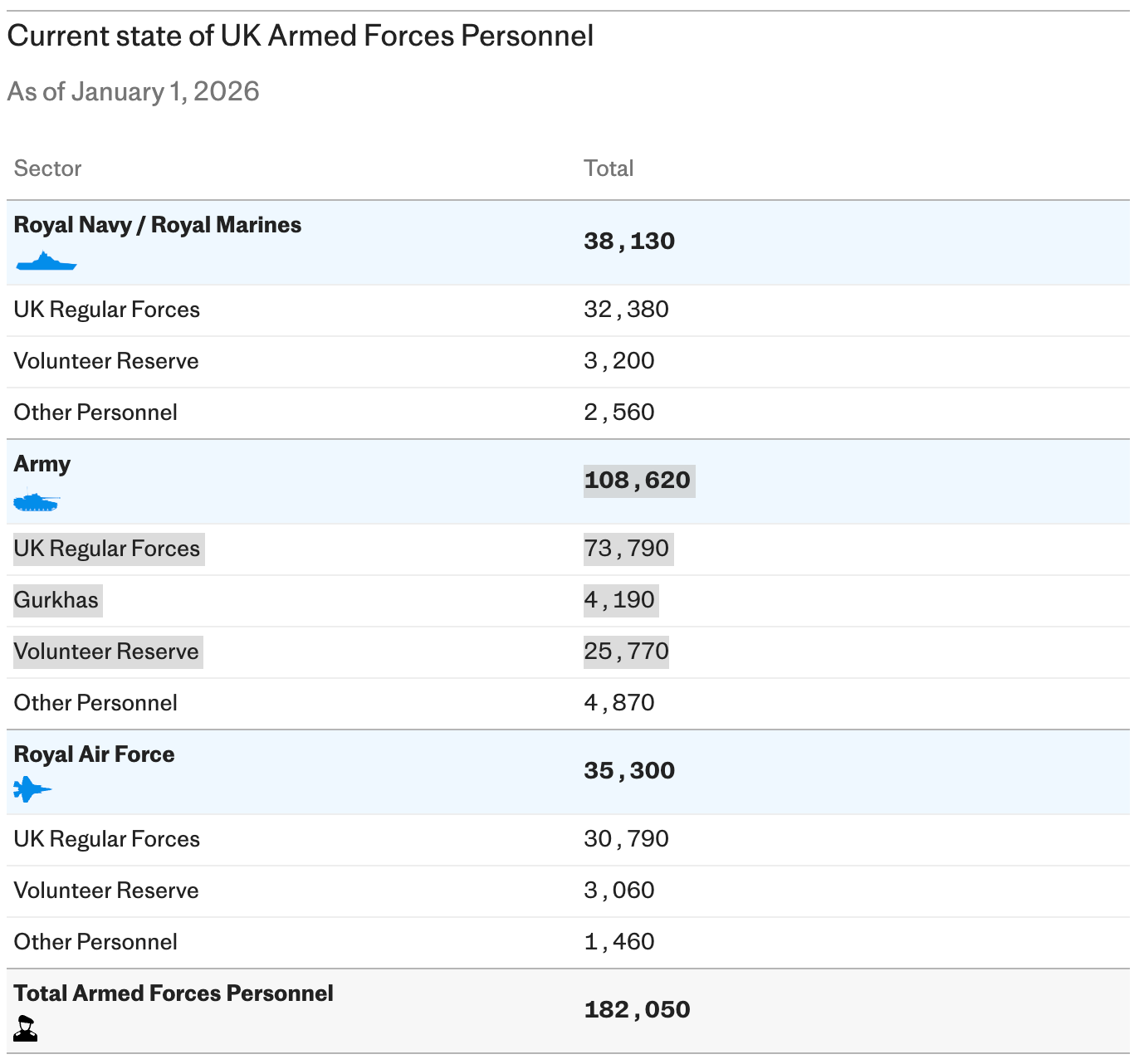
The British Army’s regular strength stands at approximately 74,000, down from 109,000 in 2000. That’s the smallest force since Bonaparte threatened invasion.
Since 2010, we’ve lost 23 regiments through amalgamation masking battalions disbanded and capability not replaced. Meanwhile, Poland is constructing a standing army of 300,000 and Germany has announced 460,000 trained personnel as its target. We’re not even close.
Nato expects Britain to contribute a corps headquarters and two divisions. But that’s not credible. We’d be hard pressed to deploy a brigade. Alliance brings strength, dependency does not.
The reserves are also under-strength, under-trained, and poorly integrated into any realistic mobilisation plan.
But that’s not all. One further figure, which every officer and analyst in this room already knows, and which should nonetheless be stated aloud at every address on British defence until the picture changes is the number eight.
The United Kingdom can sustain major combat operations for approximately eight days before running out of bullets. Eight days.
Meanwhile, in Ukraine, Russia is expending up to 10,000 artillery shells a day and has learnt to use drones at scale. We’re losing credibility and that erodes deterrence. And weakness is provocative and can cost us at home.
At the same time, Royal Air Force fast-jet numbers couldn’t sustain a campaign at the scale of recent operations. F-35 deliveries remain below the programme’s own ambitions and the RAF has gone from 54,600 personnel in 2000 to 31,940 today, the steepest cut of any of the three services (and not all of that is due to automation).
As for the ambition for an air-launched nuclear weapon, it adds further cost when we can’t even resource what we have today. Further, we have no integrated short-range air defence protecting critical national infrastructure.
The National Health Service (NHS) has no mass-casualty plan designed for industrial-scale warfare. The Cold War infrastructure that provided such a plan was dismantled in the 1990s on the assumption that it would never be needed.
Let’s be honest. This isn’t just about politicians. It’s about all of us and the kind of country we want to be.
Welfare, pensions and the NHS
When 9/11 happened, Number 10 couldn’t even find the key for the prime minister’s bunker.
We have made choices and saved pennies until the gap between what we say and who we are has become a chasm. That’s not bad luck. That is the bill for 30 years of choices, arriving as one.
Successive governments delivered what was consistently being demanded of them. In forced-choice polling, even today, defence ranks eighth out of 13 priorities, behind the NHS, pensions, disability benefits, education and policing.
While we’re spending just over £63bn on defence, we spend beyond five times that on welfare – more than 10 per cent of GDP.
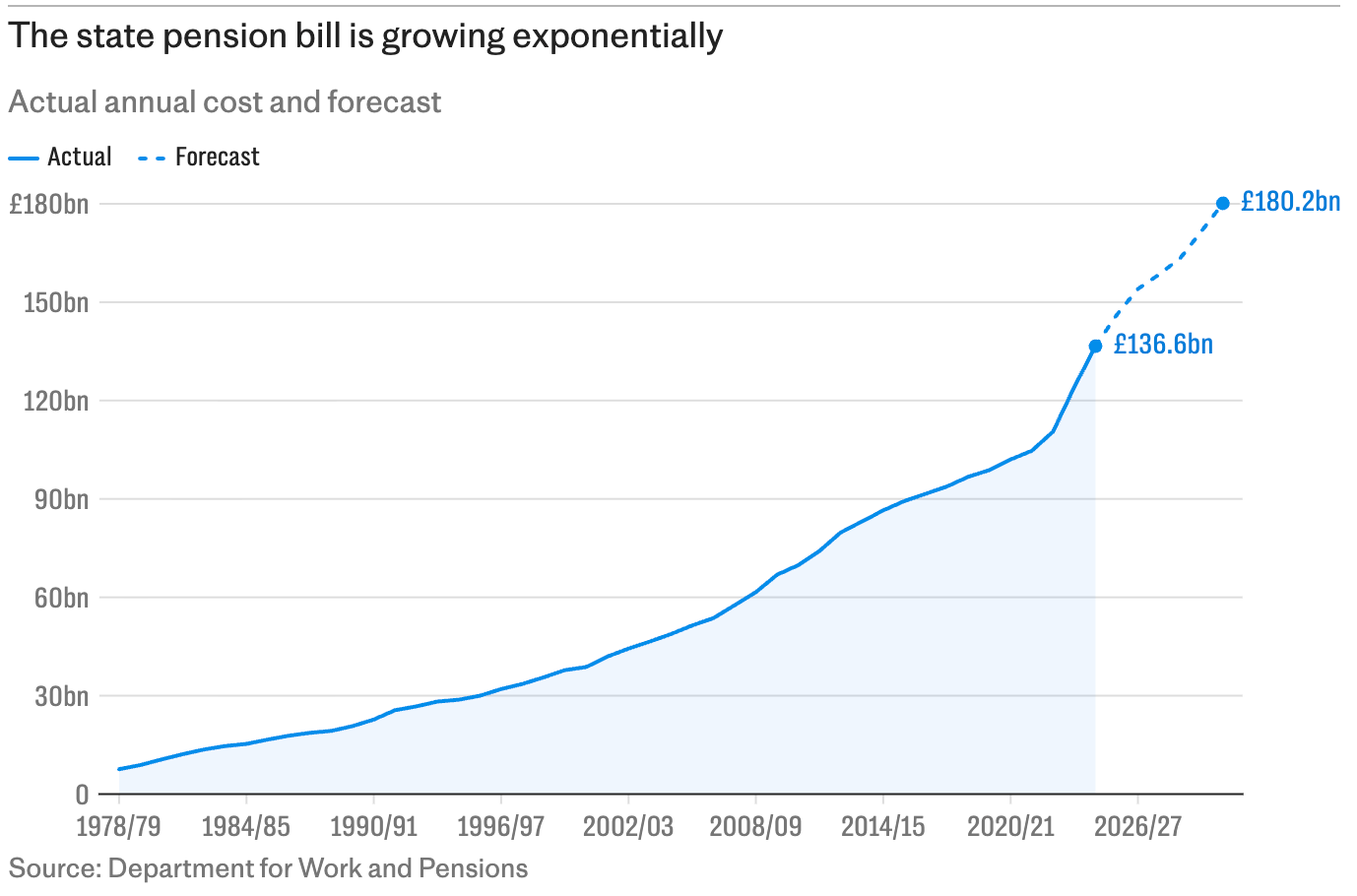
The state pension costs taxpayers £146bn and other pensioner-related benefits bring the total to about £180bn, nearly three times what we pay on defence.
Today, health and disability benefits cost £76bn, already more than we spend on deterring war, and that’s likely to hit £100bn by the end of the decade because the demographics are unforgiving.
Today, there are three and a half working people supporting each pensioner. By 2050 there will be two.
I don’t believe our economy can shoulder more taxes than today’s peacetime high. That’s why I argue we need to look again at where money is going.
By 2030, the triple lock is projected to cost £15.5bn a year more than if it were linked to earnings – three times the original forecast. In cash terms, that’s the equivalent of a 20 per cent increase in the entire defence budget.
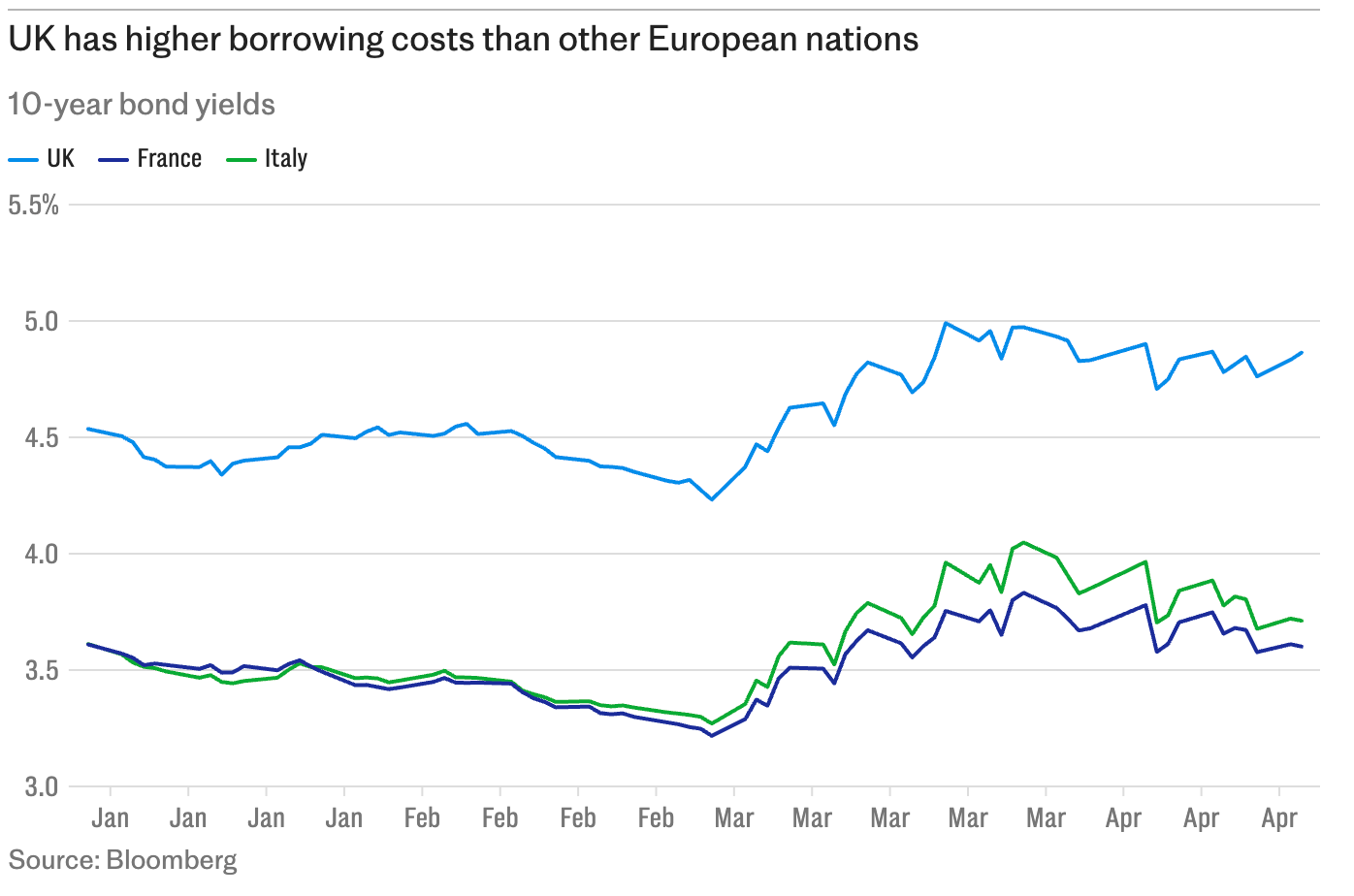
As for debt, it is still rising and the interest bill, which was approximately £49bn in 2019, has nearly trebled to £110bn annually because of quantitative easing, Covid and welfare.
And it keeps going up. With inflation-linked debt likely to drive costs higher we are set to go beyond double the defence budget on paying the interest on what we owe.
That’s why this can’t go on. We can’t promise pension rises or sickness benefits that leave us exposed.
Soft power is not enough
It’s time we were honest with ourselves. At one time, we were.
When Britain helped write the rules of the post-war world we knew we had to help enforce them. Along with other free nations, we invested in the Bretton Woods framework, the Atlantic alliance, the United Nations, the General Agreement on Tariffs and Trade, the Commonwealth, and much more.
We knew that soft power was the velvet on the mace – softening the ask, veiling the threat. Rule-writers and rule-enforcers were the same countries, because the architects of the post-war settlement understood that words without weapons are just wishes.
After the end of the Cold War, we forgot that we still had to pay the bill. The speeches from Number 10, the Foreign Office and Defence have barely changed, but the ships, planes, people and bases; the factories and stockpiles, have dwindled.
We told ourselves fairy tales, myths of our glorious past and gentle future forgetting the price of peace. Our diplomats, the BBC, the British Council, the City of London, the English language itself are all soft power. They can, we are told, carry a load that, until 1990, had needed steel and strength. We’ve forgotten the truth:
Soft power is not just weaker than hard power, it depends on it. The institutions through which soft power operates – the alliances, the multilateral frameworks, the treaty bodies – derive their authority from the order that hard power maintains.
Power isn’t hereditary. It’s bought with ships, aircraft, battalions and the industrial capacity to make them and the willingness to act. As I warned when I took over the Foreign Affairs Committee eight years ago, you can’t hide behind treaties and pretend peace is eternal. You will be found wanting.
The evidence is now too great to be ignored: France defends British sovereign territory; the US takes decisions that determine our future without consulting us. And the reason is clear.
We have too few ships, too few soldiers and too few planes. We have factories receiving too few orders and the armouries holding too few stocks. And we have a government too keen to punish those who try to protect us. Those are not opinions. They’re facts.
But I’m not going to end on that. There are three tests for us to turn this around.
It is not too late
First, in the short term: the “Falklands test”. Britain must be able to assemble a credible task force within 72 hours and deploy it to any sovereign British territory within the time window required to prevent its loss.
Second, in the medium term: the “technology test”. Britain must be able to match and defeat a modern, fully equipped peer adversary in the air, on land, at sea, and in the electromagnetic and cyber domains, with the drones, integrated air defence, long-range fires, and the resilient command-and-control that contemporary warfare actually requires.
Third, in the long term: the “North Atlantic test”. Britain must be the most capable European power in the most important domains for our national life: the North Sea, the Baltic approaches, the North Atlantic, and the GIUK Gap securing our energy and communications connections.
It’s not too late. Poland has tripled its defence spending in a decade because successive Polish governments made the case and argued the need.
Estonia, Lithuania and Latvia all spend more than we do as a proportion not because they want to, but because their leaders said the hard things clearly, and their citizens, who want peace as much as ours, chose to be serious when presented with the reality of the choice before them.
What we need now is not just the money or the mass; most importantly, we need politicians willing to say, clearly and repeatedly, things that for 30 years have been thought unsayable.
The diagnosis has not been comfortable and the remedy won’t be simple. The evidence, however, is clear. And the choice, for the moment at least, remains ours to make.
The last remaining question is whether the national conversation that reinforced our predicament is capable, in the years immediately ahead, of producing the cure. That is a question for all of us to answer in our own way.
First published in the Telegraph on 29 May after the speech was given at Policy Exchange.
Britains problem is that the enemy is within your gates and has been for decades and is accelerating and you guys do nothing about it. Your judges lecture 14 year old girls about having weapons to protect themselves against Muslim predators. Your police throw white fathers in jail when they complain about Muslim rape gangs targeting their daughters. Your king elevates Ramadan ending over Easter. Some defender of the faith, or maybe he is, it’s just a different faith eh? Your police and elites sneer at English people who show the English flag in an English country. They call it racist. You coddle illegal aliens and insert them into English communities to what end.
As you rightly point out, your AG is on the side of terrorists and your PM is the same kind of worm. Insects stick together.
And then there are complaints Trump didn’t inform the UK what he was going to do in Iran? You all would have acted like democrats, informing the enemy without adding anything.
Good luck.
Nothing here about the military leadership's addiction to gold plating in procurement, the publc sector's gullabilty in the face of an exploitative private sector, the incestuous relationship between officers involved in procurement and the firms they hope will employ them post-retirement, the misplaced aspiration of a declining and overly deindustrialised middle power (aircraft carriers, really?), etc. This isn't serious.