


In the past week, Russia has destroyed dockyards in Odesa, targeted German ships in the Black Sea, and the Danube River’s port at Izmail. They have killed troops on the frontline, grain handlers in ports and sailors at sea. They have even targeted families, children and a market seller.
One technology has allowed them to do this: drones.
Today, the two most drone-capable nations are Russia and Ukraine. Without Kyiv to learn from we would be at real risk on a changed battlefield.
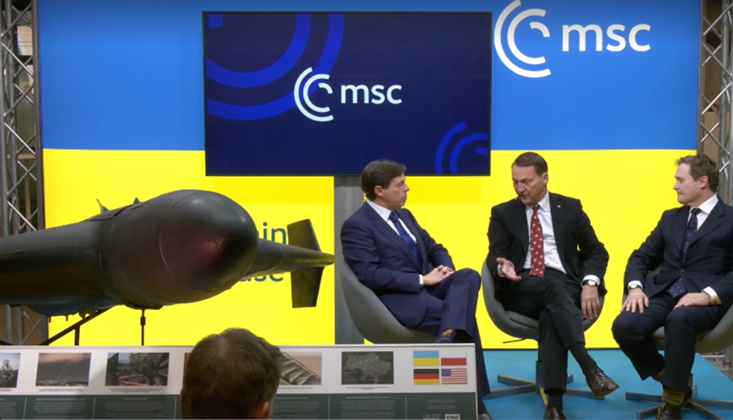
Back in March I was on a panel at Munich Security Conference where the threat was clear and one thing stood out. We all need Ukraine.
Kyiv have embraced electronic warfare and the improvised ingenuity of their nation has learnt to fight a superpower with whatever it can build or scrape together. All of it has become the embodiment of what is possible when the compulsion to act leaves no choice. A lesson that many of us may soon have to take to heart ourselves.
The admiration for this technological creativity stood in sharp contrast to the mood among Europeans. They spoke of alternatives to the American security umbrella, without real conviction, and I heard more than once the sentence that Europe would be in immediate danger should Ukraine fall to Russia.
That is true. But it is not the old Soviet shock army we need to fear, that armoured steamroller that a generation before us still dreamt of rolling through the Fulda Gap. Ukraine has shown us that this force is spent. What remains of Russia’s bungling troops is not military competence, they are dispensable even to their own generals, cannon fodder without value. What remains are monstrous powers of destruction.
The defence of Kyiv is the cheapest security purchase Europe will ever make.
Moscow has sent thousands of its own men to their deaths. Not for an ideal, but to beat out of Ukrainians the dream of a better future. Murder upon murder at home, rape upon rape abroad; that shows what this is really about, not military strength but carnal cruelty. That is the reality we must face. Spetsnaz battalions will hardly take Warsaw or Budapest. But they can turn those cities into hellscapes and let their political systems sink into the swamp of corruption. That is precisely why the defence of Kyiv is no act of charity, it is the cheapest security purchase Europe will ever make.
Some countries have grasped this faster than others. Poland, which shares a border with both Ukraine and the Russian exclave of Kaliningrad, is spending 4.8 per cent of its GDP on defence this year, more than any other NATO member. Warsaw is ordering tanks, howitzers, fighter jets and air defence systems at a pace not seen since the Cold War.
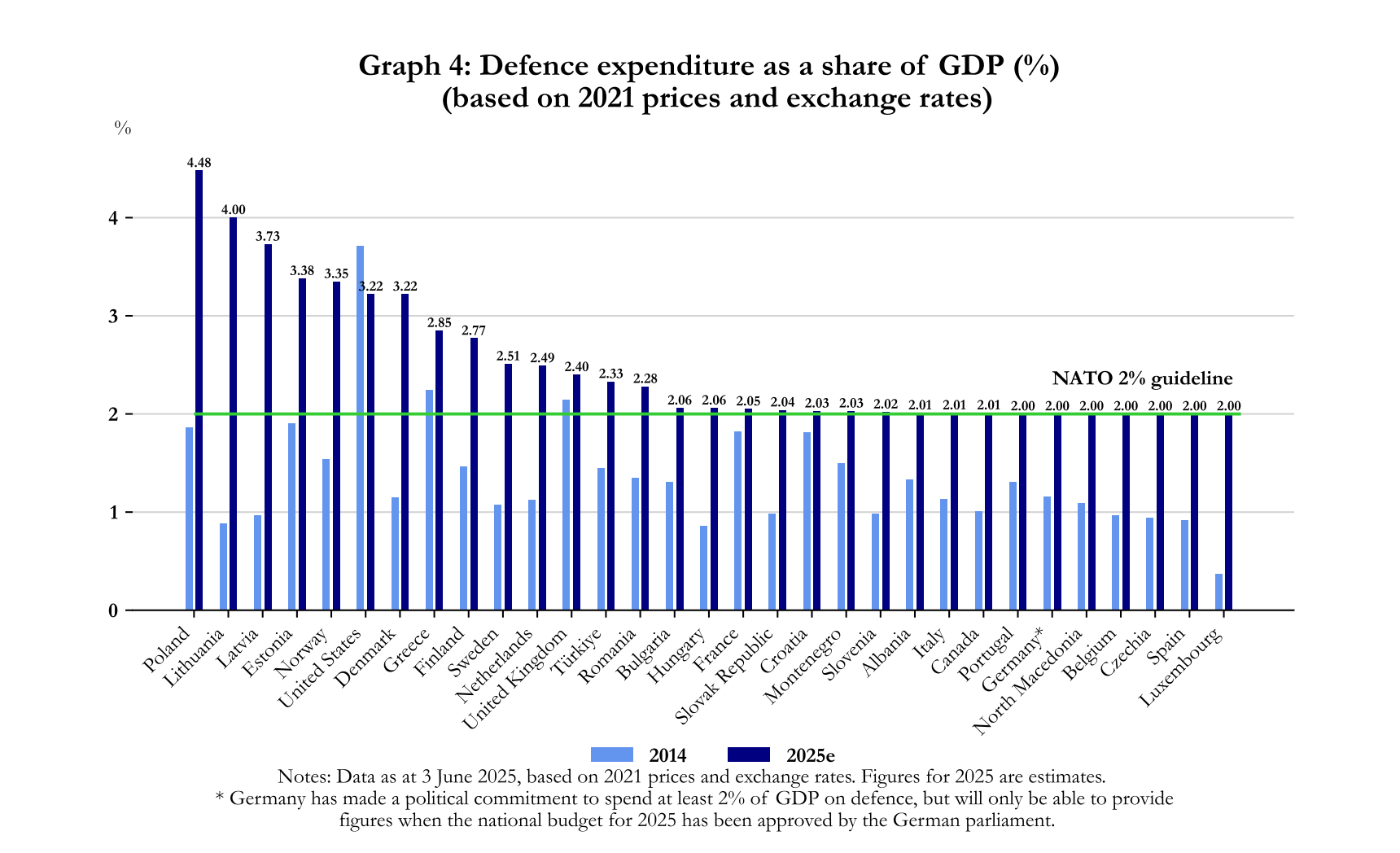
Poland’s Prime Minister Donald Tusk put it plainly: you cannot defend your border with a small budget deficit. He is right. Germany too, after decades of strategic slumber at the expense of American patience, is finally moving. The German defence budget for 2026 stands at 108 billion euros, nearly double what it was just three years ago, with the declared aim of reaching 3.5 per cent of GDP by 2029 and building the strongest conventional army in Europe. A permanent German brigade is being stationed in Lithuania. These are not symbolic gestures. They are the beginnings of something that should have started a generation ago.
For tanks and fighter jets are of little use when the enemy is already inside your walls. Russia does not only wage war. It corrodes. We have watched it in Georgia and Moldova. We are watching it across Europe, including in Austria. The defence against the Russian cancer of corruption and gangsterism is indispensable, not only to prevent military occupation but also to halt the creeping decay of those institutions that make democratic governance possible in the first place.
We have all been targeted. In 2018, Russian agents poisoned Sergei and Yulia Skripal in Salisbury with a nerve agent that shortly afterwards cost the life of a British woman named Dawn Sturgess. A few months later, Austria’s then foreign minister, Karin Kneissl, invited Vladimir Putin to her wedding. They waltzed, and she even curtsied before the Butcher of Chechnya, Bucha, and Irpin, the murderer of Politkovskaya, Magnitsky and Nemtsov. Such abasement and cowardice was earned because Kneissl had been nominated on a ticket of the Freedom Party, which had signed a cooperation pact with Putin’s United Russia. It was a sign of who she really was.
Kneissl showed where her true loyalties lay when her government fell. She moved to France, then to Lebanon, and finally to Russia where she now runs a think tank at St Petersburg University. Kneissl herself is a marginal figure but she is a symptom of a corruption of Europeans and others and not an isolated case. A former Austrian intelligence officer is currently standing trial for espionage on behalf of Russia. Like many across Europe, Austrians were not merely influenced, some were simply bought.
That is why a term like neutrality is meaningless today regardless of the Soviet demands that committed Vienna to non-alignment in 1955. The world has changed. Finland and Sweden, neutral for decades longer than Austria, drew the honest conclusion after 2022: they recognised that they are inseparable from the free states of the European Union and not from the mafia regime in Moscow.
For the rest of the world this is obvious. In Austrian politics almost nobody is willing to say it. One exception is Veit Dengler, the ex-NEOS member of parliament who openly advocates Austria’s accession to NATO and describes neutrality not as protection but as an illusion. His own party has stripped him of the foreign policy brief for it and later expelled him for refusing to break his party’s manifesto promise to cut party funding. The fact that even a moderate party like NEOS takes taxpayer cash and vacillates over the best security citizens could have – NATO – says everything.
Ukraine and Iran show us that we must stand together.
And this is not a purely Austrian problem. Nationalist movements across the continent wave the flag in public and curtsy in private. Banking and energy networks that should long since have been severed still spread Russian influence across Europe and serve as levers for our subversion.
Ukraine shows us why this must stop. Iran shows us that we must stand together. Britain and the European Union signed a security and defence partnership last May the first formal framework since Brexit. Poland is rearming, Germany is spending on a scale unthinkable five years ago. But arms are only half the battle.
The most important currency of containment is the will to confront corruption in one’s own country, to follow the money wherever it leads, and to accept that neutrality in the face of this kind of aggression does not make us safe, but defenceless. If Ukraine falls: good night, Europe. The question is whether we are awake enough to prevent it.
First published in Die Presse 28 March 2026
Yet continuing to allow the illegal and expanding influx of military aged men to almost every European country is madness.