


Six hundred years ago, at Agincourt in northern France, King Henry V’s outnumbered, English army faced the flower of French chivalry. French knights were expensive, each warrior the product of many years of training, his armour and warhorse a major investment for him and his family.
Henry’s archers carried longbows that cost little, drawn by men trained in every village across the kingdom. When the volleys came, the knights fell quickly. Quantity overwhelmed quality, and the mud helped. France lost the battle, but defeat in the war came not just because the knights had died, bowmen had been killed too, but because the knights could not be replaced.
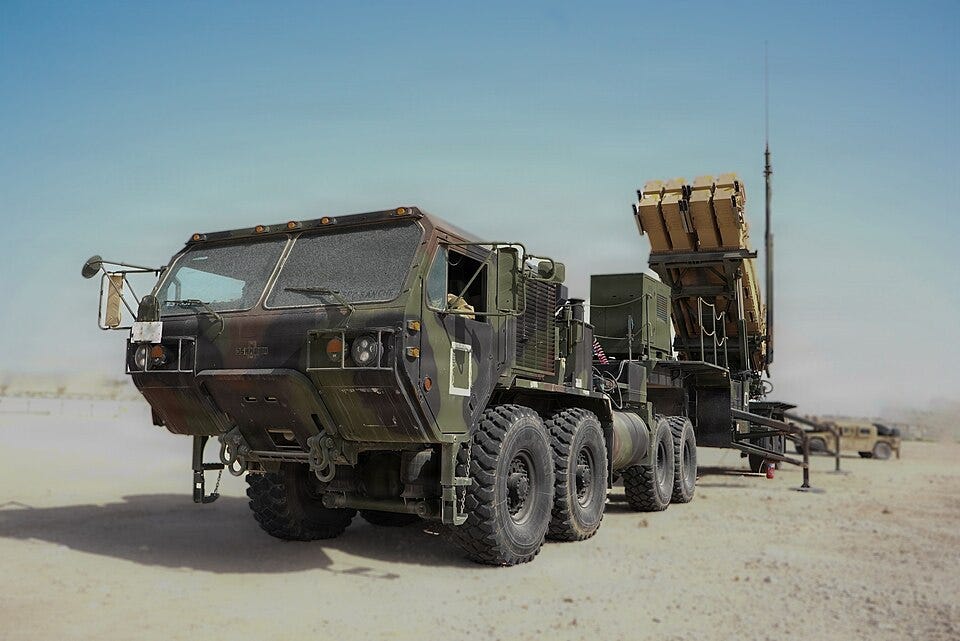
We’re seeing the same in the Iran War today. Patriot interceptors are exquisite, a wonder of engineering, the product of decades of accumulated technical mastery, each one the labor of hundreds, perhaps thousands. The Iranian drones they intercept are arrows: cheap, plentiful, made in bulk.
Since February, the US has fired more than 1,300 Patriot interceptors against Iranian missiles and drones. Each interceptor costs around $4 million to destroy weapons that cost between $20,000 and $50,000. Based on the most recent rate of production, it will take two years for Lockheed Martin to replace what has been fired in the past 2½ months. That is the economics of defeat, and our adversaries understand it.

Each Patriot is also a creature of supply chains we don’t fully control. The US-made guidance chips depend on helium, supplies of which have been disrupted by the war in Iran. Even if Congress voted the funds tomorrow for 10,000 new interceptors, the metal and the gas would still have to be found, the workforce trained, and the production lines tooled. We are running short of the raw materials for our exquisite weapons while our adversaries flood the battlefield with cheap drones.
Next-generation fighters, multibillion-dollar carriers and so much more mean that although each is a marvel, we have too few, and they’re too hard to replace, making them too valuable to risk.

Sophistication has become our vulnerability. Ukraine shows the alternative. More than 1,000 interceptor drones roll off Ukrainian production lines every day, at $1,000 to $3,000 apiece. The bodies of Kyiv-built attack drones are redesigned within months, not years, their engines even more quickly, and their guidance software within a matter of days. By keeping costs down and rapidly iterating simple technology, at scale, Ukraine is delivering a devastating effect.
Behind this show of force sits a market the government built. Programs like Brave1 connect investors directly to startups and to the user on the front line, giving fast feedback. That’s how a country at war fields more than 2,000 defense companies and runs production cycles from outline to front line in months, not years.
Ukraine produced four million drones last year and plans to produce seven million this year, 10 times its output three years ago.
We’re not the only ones who have noticed. Gulf monarchies, which have bought American for decades, are looking at Kyiv as the partner for drone warfare. Their models are cheap, quick to produce and still in active development on the Donbas front.
While the U.S. is cautious about allowing even close allies to use cruise missiles, Ukraine has an alternative. See Spider’s Web, the June 2025 operation that smuggled more than 100 drones deep inside Russia and struck four air bases and 41 aircraft, including several bombers, causing an estimated $7 billion in damage.
For Ukraine, that’s the economics of victory: billions of dollars of weapons destroyed by drones that cost around $2,000 each.
The cure to what ails the North Atlantic Treaty Organizations’s militaries isn’t another exquisite platform. It’s an industrial base that can take an idea and turn it into a million in a year. That means pivoting civilian production lines to defense and giving contracts to the manufacturer that can deliver 100,000 drones a month, not the one that delivers a dozen platforms in a decade.
The goal is no longer the perfect weapon. You build the best you can. Then build it again, 90% as good, at 80% of the cost, in 50% of the time. Then do it again and again, a thousand times more. That not only fills the armoury; it creates a system to keep it full.
In the Iran war, we’re equipping like the French at Agincourt when what we need is an army of archers.
First published in the Wall Street Journal 19 May 2026
I bet the UK and the EU do neither.