


Late on Sunday I returned from 24 hours on the road and in the air on the way back from the Black Sea Security Forum in Odessa. It was striking to be back in Ukraine again but for the first time, not in Kyiv. The atmosphere is completely different. It has a mediterranean vibe, hardly surprising as another warm, port city, and has echoes of its past life everywhere. Synagogues and Greek Orthodox basilicas appear almost as numerous as Ukrainian Orthodox churches. And the food is fabulous.

The journey there and back was also striking in the contrast between many of the roads in Moldova - small and potholed - and many of those in the Odessa region. It's clear that a peace could bring huge opportunity for the people of the Black Sea region.
The conference itself raised many issues. But the most profound conversation was interrupted by the familiar wail of air raid sirens in the early hours of Saturday morning. As we made our way to shelter, the contrast couldn't have been starker: somewhere across Ukraine, children were being roused from their sleep by the same mechanical scream, huddling in basements and metro stations as Russian drones searched for schools, hospitals, and apartment blocks to destroy.
Across Ukraine, children were being roused from their sleep by the mechanical scream, huddling in basements and metro stations as Russian drones searched for schools, hospitals, and apartment blocks to destroy
Within hours, a different kind of drone story would emerge. Ukrainian forces launched Operation Spiderweb - an audacious strike that hit 41 Russian strategic bombers at four airbases deep inside Russia, some over 4,000 kilometres from the front lines, some approaching the borders of China. The operation used drones hidden in wooden sheds mounted on trucks, with remotely activated mechanisms that lifted roof panels to allow the drones to fly out and attack.
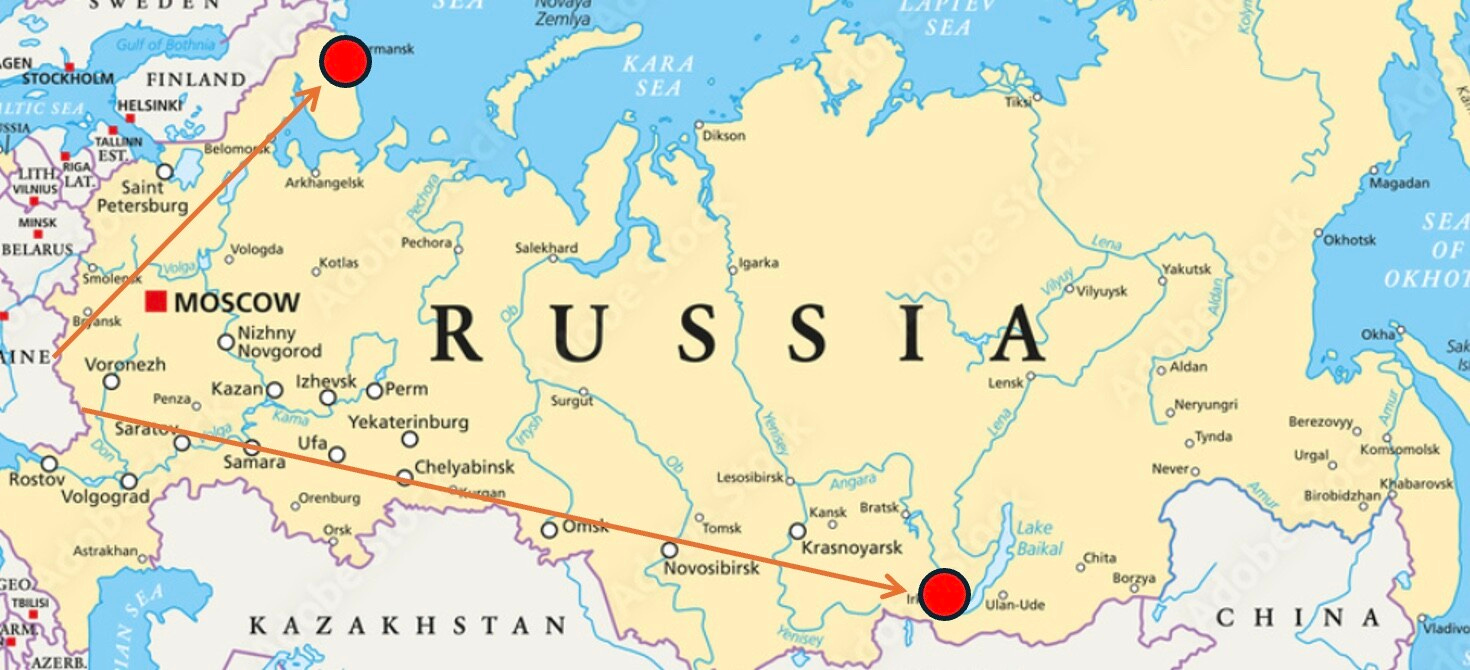
The asymmetry is telling. Russian bombers - each worth tens of millions of dollars, representing the pinnacle of Soviet-era engineering - were crippled by drones you can buy off Amazon for just a few hundred dollars each. These Tu-95, Tu-22M3, and Tu-160 strategic bombers had been the platforms for launching cruise missiles at Ukrainian cities. Now they sat burning at their bases, victims of technology that any hobbyist can buy online.
This is warfare's new reality: steel has been conquered by silicon. Ukraine is teaching the world a fundamental lesson about the future of conflict - that technological ingenuity, deployed asymmetrically, can neutralise conventional military might that cost orders of magnitude more to build and deploy. As one US commander noted, Ukraine has become "the world leader in one-attack drone technology".
The implications stretch far beyond the steppes of Eastern Europe. Russian tank losses have been catastrophic - thousands destroyed, with even their most advanced T-90M main battle tanks proving vulnerable to Ukrainian drones. At sea, Russia's Black Sea fleet has been similarly devastated making history as the first navy to be sunk by an army as sophisticated warships were destroyed by Ukrainian maritime drones.
The pattern is consistent: expensive platforms built for yesterday's conflicts are being destroyed by cheap, adaptable technologies designed for today's realities. Ukraine hasn't just shown that tanks can be vulnerable - it has demonstrated that the entire concept of heavily armoured, slow-moving, high-value targets may be obsolete in an age where swarm attacks by minimal-cost systems can overwhelm any defence. It also puts at risk infrastructure which can now be reliably hit at range and with no warning, as the sea drone strike on the bridge crossing the Kerch Strait in Crimea demonstrated.
This revolution demands urgent attention from Western militaries, particularly Britain's. Our current force structure - built around expensive platforms like aircraft carriers, main battle tanks, and manned fighter aircraft - may be precisely the wrong approach for future conflicts. We risk building a 20th-century military for 21st-century wars.
The fundamental challenge isn't just technological - it's intellectual. As the great military theorist Basil Liddell Hart observed: "There are over two thousand years of experience to tell us that the only thing harder than getting a new idea into the military mind is to get an old one out."
Ukraine's lesson is stark: the future belongs to mass, not class. Quantity has a quality all its own when directed by intelligent software and operated by innovative humans. The UK needs to dramatically accelerate its embrace of drone technology, artificial intelligence, and distributed warfare capabilities. But more than that, we need more people defending our nation and our interests, not just to support traditional platforms, but to operate the thousands of networked systems that future warfare will demand.
The era of steel has ended. The age of the algorithm has begun. Ukraine is writing the textbook, and we must learn to read it before it's too late.
Really enjoyed reading your Dispatches - 'Lessons from the Black Sea' - Thank you Tom. Last in Odessa in the mid 90's and enroute to 'Krym' and Balaclava and Yalta! Yes, the thick pork lard not to everyone's taste but when washed down with vodka it magically improves! Sadly, the optimism of the creation of The Commonwealth of Independent States (CIS) and reality of the Russian Black Sea Fleet base on Ukrainian Crimea was an enigma then and a potential fault line - alas now tragically and irrevocably ruptured. You are so right - we must take a leaf out of the Ukrainians AI drone tech in daring audacious combat operations. Our MoD must radically shift and adapt to prepare for the new 21st century warfare realities - now changing before our eyes.