


It’s said that the first Supreme Leader of Iran, Ayatollah Khomeini, joked that the water that divides Arabia from Iran should be renamed the American Gulf after the nation that exploits it. That wouldn’t be the first time its name was in dispute.
Today, most call it the Persian Gulf, emphasising its connection to the pre-Islamic empire that once ruled from the Indus to the Aegean but some have tried to switch it over to Arabian Gulf in recognition of the states on the western shore.
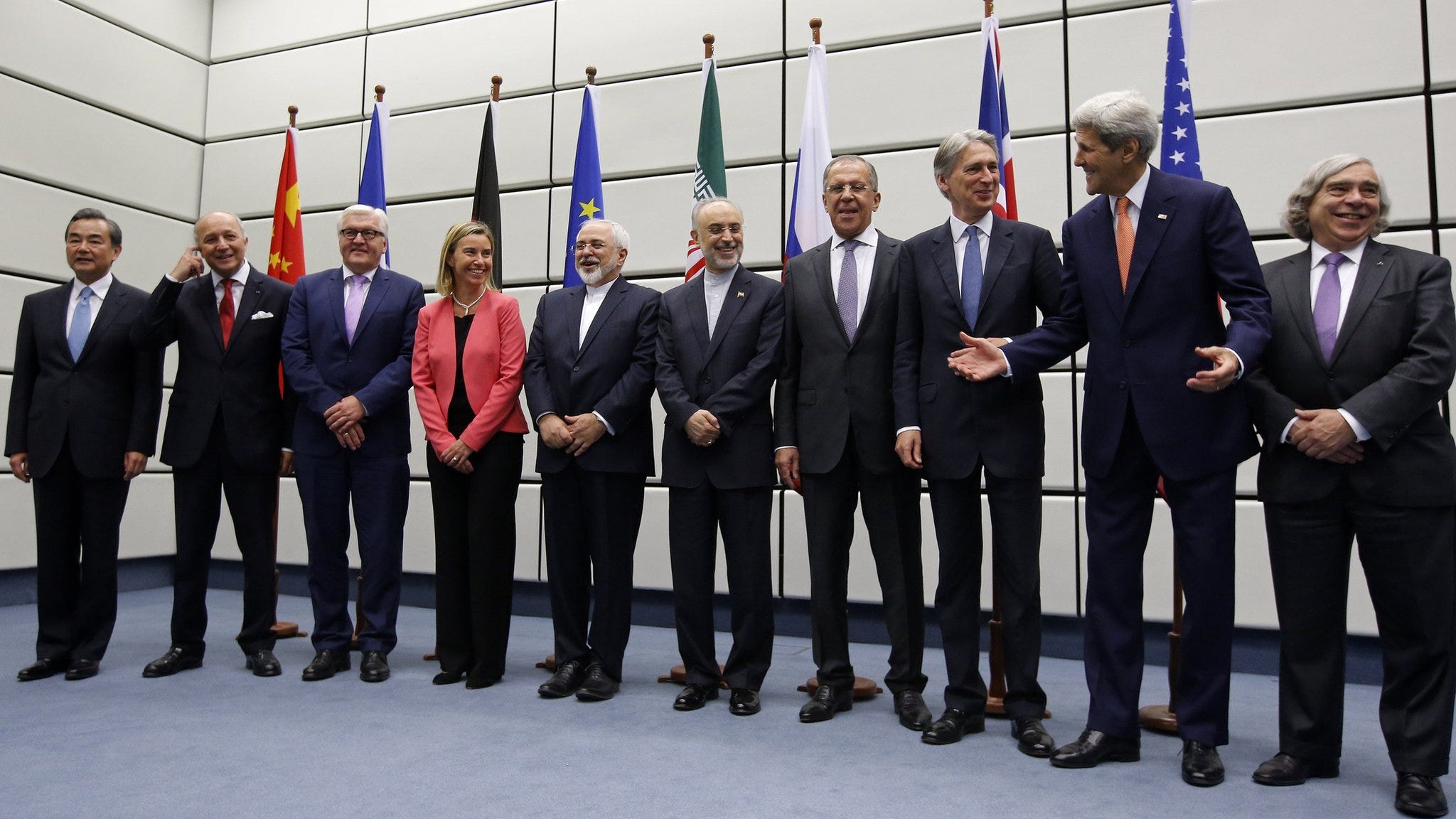
The US deal settles the debate by recognising one key fact: many can access the Gulf, but Iran can close the Strait. That victory may bring $300 billion to those who control Hormuz, if they stick to the deal.
Washington promised the money to ensure the rehabilitation of Iran, as well as lifting the sanctions constraining the regime’s oil sales and opening up the banks and insurers that had been closed to them.
The deal’s supporters, like those who backed President Obama’s similar agreement a decade ago, insist that the frozen reserves stay frozen and nothing moves until Tehran behaves, but the way it’s being reported in Tehran and in the media on Capitol Hill in Washington suggests one side feels victorious and the other not.
Republicans in Congress who have spoken out can recognise the ghost of 2015, when the last deal released the better part of $100 billion of Iranian money on a solemn promise of moderation. Those of us who opposed it then, as I did, were clear that it would give money to murderers. Senators Ted Cruz and Tom Cotton, who chairs the Senate Intelligence Committee, have used similar words in the media, because we all know what happened last time.
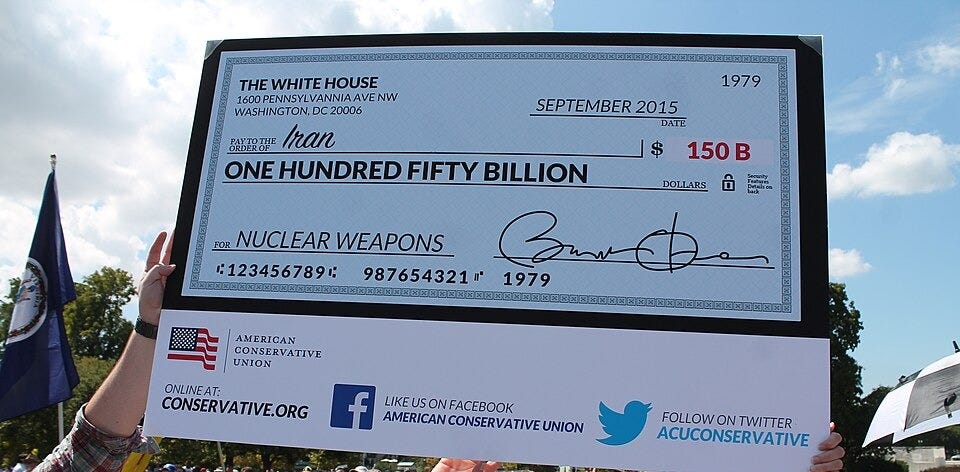
What did Iran’s government do with the money they got? Did they build hospitals? No, they dug graves.
Across Syria, Lebanon, Yemen and Iraq, the money went to backing militias and terror groups supporting then-President Bashar al-Assad. They financed the barrel bombs falling on Aleppo and the chemicals that suffocated those sheltering in cellars. Tehran fuelled a war that hollowed out a country, driving millions across the Turkish border in the largest refugee movement on earth, and sending a column of desperate people north into Europe in the autumn of 2015.
Angela Merkel told her people they could cope with the words “Wir schaffen das”, German for “we can manage this”. Given the rise of the Alternative für Deutschland, and of other such parties across Europe, she may have been wrong. President Obama’s deal with Ayatollah Khamenei shook our continent to its core, and we can still feel the tremors.
You’d have thought Washington would have learned the lesson. Æthelred’s attempt to buy off the Vikings has been immortalised in our politics as Danegeld, with the reminder that paying the Danes ensured they would return for more. Perhaps we should just call it tala now, the Persian word for gold.
The deal’s defenders will say the new money is ringfenced, supervised, conditional. They said that last time. What they gloss over is that in reality there is no civilian government in Iran. The Islamic Revolutionary Guard Corps is the state. It fires the missiles, commands the proxies, controls the factories and farms, and answers to the Supreme Leader alone. And the IRGC is sworn to one thing: advancing the Islamic Revolution, the millenarian cult that has murdered millions of Muslims, thousands of Jews in the region, and even people on our own streets.
That’s why this matters to us. That money won’t stay in Tehran. If any of the $300 billion is injected into the IRGC’s bloodstream, they will use it to target us. I have not only been sanctioned by Tehran but targeted by their proxies and, in Afghanistan, attacked by their agents.
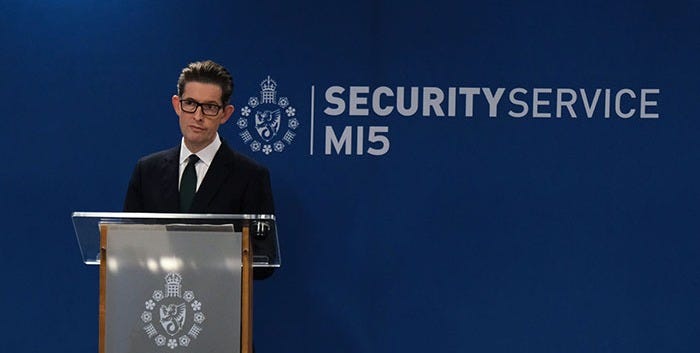
According to the Director General of MI5, this country has confronted more than 20 potentially lethal Iran-backed plots on our own soil since the start of 2022, and last autumn he revealed that the same grim tally had been reached again in a single year. The money won’t be resting in their account for long, but will go out in contracts around the world.
The IRGC hires others to do its killing and works through proxies to launder cash and target opponents. Follow the trail and it will take you from London to the Iguazu Falls, where Argentina, Brazil and Paraguay meet. You will meet phone smugglers, restaurateurs, charity workers, preachers, and, perhaps most surprisingly, Iranians carrying diplomatic passports from countries like Venezuela. At each step, proxies like Lebanon’s Hezbollah do whatever is necessary to bankroll terror. With $300 billion, they will have even more freedom to act.
That means we need to be ready. Our intelligence and security forces aren’t structured to face the massive increase in state threats Iran could bring. We know that Tehran has already plotted to kill the Saudi ambassador in the US and dissidents like Masih Alinejad in New York. Do we really think they will stop there? Not when, according to them and their friends, they’ve just faced down the Great Satan and won.
Nor do they think they have any reason to concede before the final victory of the returning Mahdi, or messiah, as they see it, particularly now they have an ayatollah some claim fits the bill.
Since his elevation in March, Iran’s new Supreme Leader, Mojtaba Khamenei, who inherited his father’s throne in defiance of a revolution that swore to abolish princes, has hidden his face and silenced his voice. It seems likely that he will emerge during the funeral, which opens in Tehran on 4 July and ends at the shrine in Mashhad, where Mojtaba was born, five days later. Choosing American Independence Day and emphasising his claim to be the long-prophesied Khorasani who will save them, would not be an accident.
Will a regime that believes it was saved by a hidden Mahdi really abandon nuclear weapons? It seems unlikely. This deal, like Obama’s, is based on a rational government that hasn’t ruled in Tehran for nearly 50 years.
So what are neighbours to do if even the UK should now be concerned about Iran’s capabilities? Many are hedging.
The United Arab Emirates staked its security on the US and expelled IRGC finances from its banks and institutions. For its loyalty, Abu Dhabi and Dubai absorbed the heaviest bombardments of the war, with thousands of missiles and drones hitting homes and streets. Qatar, which has gifted President Trump an aircraft, holds the bleak distinction of having been struck within a single year by both Israel and Iran. From Riyadh to Manama, every capital is asking the same question: what’s coming next? It’s hard to be sure, and without certainty it’s hard to trust.
So once again cartographers will redraw their maps in pencil, but for today, after this deal, the Gulf’s name has largely gone to one side: Persia.