


Ed Miliband's first stop as UK Foreign Secretary was in Manila for the ASEAN conference. As he shook hands with China's Wang Yi, the British Army was learning that training in Kenya was cancelled after Nairobi refused to ratify our defence pact.
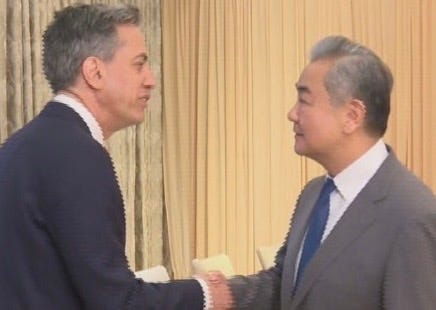
September's exercise in Nanyuki, where generations of British infantrymen have prepared in the African dust, will now be moved to Salisbury Plain. The climate and conditions are not, it's safe to say, identical. The Foreign Office pushed one on social media, but it's clear which one tells us about Britain's standing in the world.
According to the UK's chief diplomat, our relationship with China matters for our security, the economy and climate. Miliband talked with Beijing's envoy about Ukraine and the Middle East as part of what he called a 'consistent, long term and strategic approach'.
That's all a very polite way of describing a deeply antagonistic relationship.
It is now clear beyond doubt that China is undermining our security, distorting our economy and poisoning our climate. The Russian drones killing civilians in Ukraine are coming from China, while those killing US service personnel and Arab civilians in the Middle East come from the same source, this time fired by Iran.
To Wang Yi these wars are an opportunity to test China's deniable weapons. To discuss both without raising Beijing's complicity in each isn't consistent with the long term peace of Europe or the interests of the UK. It's press releases with Chinese characteristics.
Of course Miliband should be there, ASEAN matters. And Kemi Badenoch's trade deal with the Comprehensive and Progressive Trans-Pacific Partnership shows that Britain recognises that the Indo-Pacific matters and Britain should be there.
But a good foreign policy must be able to walk and chew gum, as our American friends put it. We must be able to reach out to trading partners, call out hostile rivals, and perhaps most importantly, maintain relationships that have been strained by appalling actions by individual criminals, as ours were when a soldier was accused of murdering a woman in Kenya in 2012.
The truth is, all these actions are part of the same foreign policy, all connected, and all must be handled together. The trading system we built, the alliances we maintained and the hostility we deter were all one, right from the start.
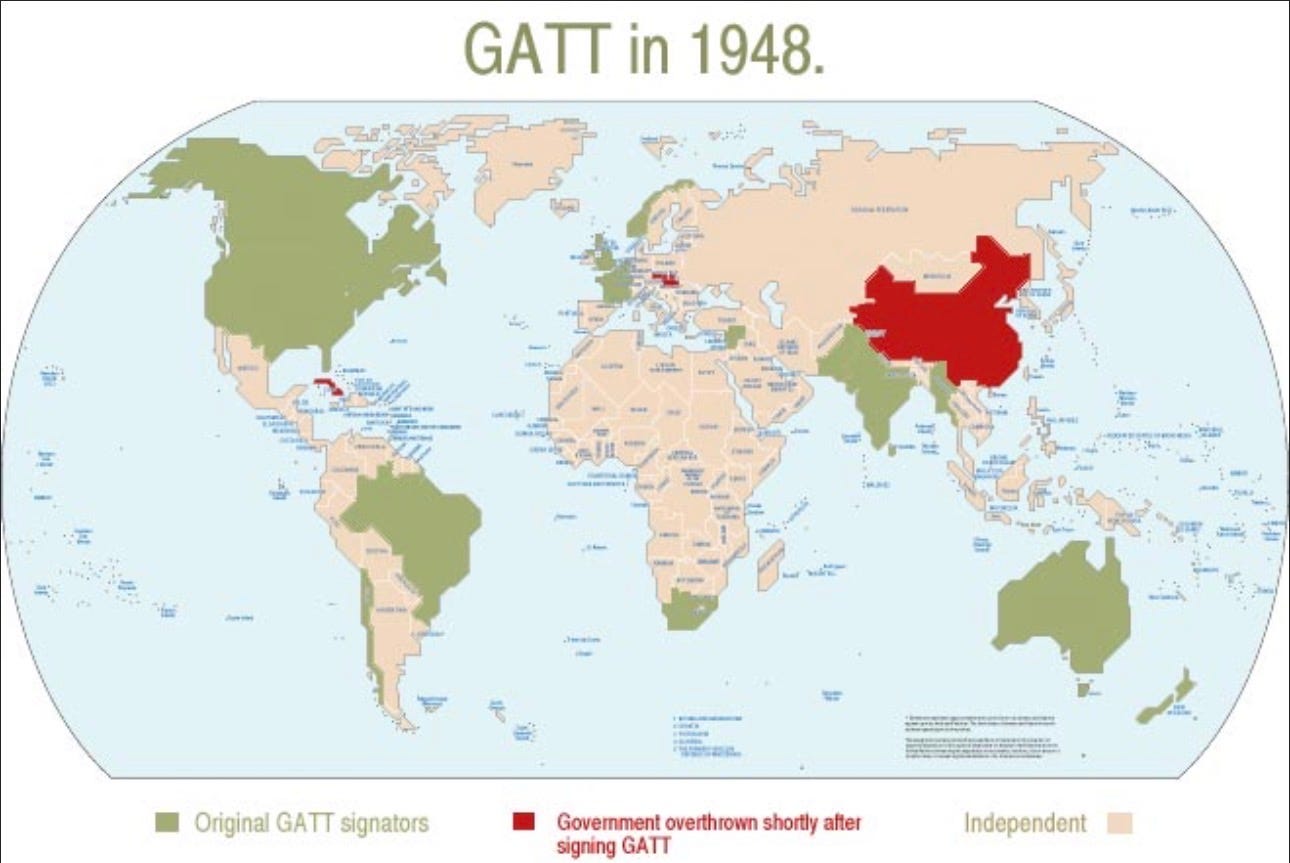
In 1947, as the rubble from the Second World War was being cleared away, the General Agreement on Tariffs and Trade was signed. It was drafted by those who had witnessed the tariff wars of the 1930s, seen trade falter and stop, and watched the Great Depression feed the resentments that ended in conflict. They knew that trade was a defence against such a crisis recurring. But they also knew that a deal was defence, not just trade, and that depended on fairness and mutual respect.
China's growth is aurplus dumped abroad with state subsidy
They wrote rules to protect open societies from a vicious spiral of protectionism and dumping that had nearly destroyed them. It grew into the World Trade Organisation in 1995, as confidence that we could tear down the walls of division grew. Our countries agreed binding rules and dispute resolution systems to strengthen us, make us richer and share the benefits of victory the end of the Cold War had finally made possible.
They built a system that worked because its members accepted that the rules protected everyone, and we all had a stake in keeping them.
That was the open trading system China joined in 2001. Over the next quarter of a century, it has gained more from such openness than any other. Open trade made Beijing rich, not central planning and certainly not communism. Only when China's factories were plugged straight into Western markets, Western technology and Western capital could they flourish.
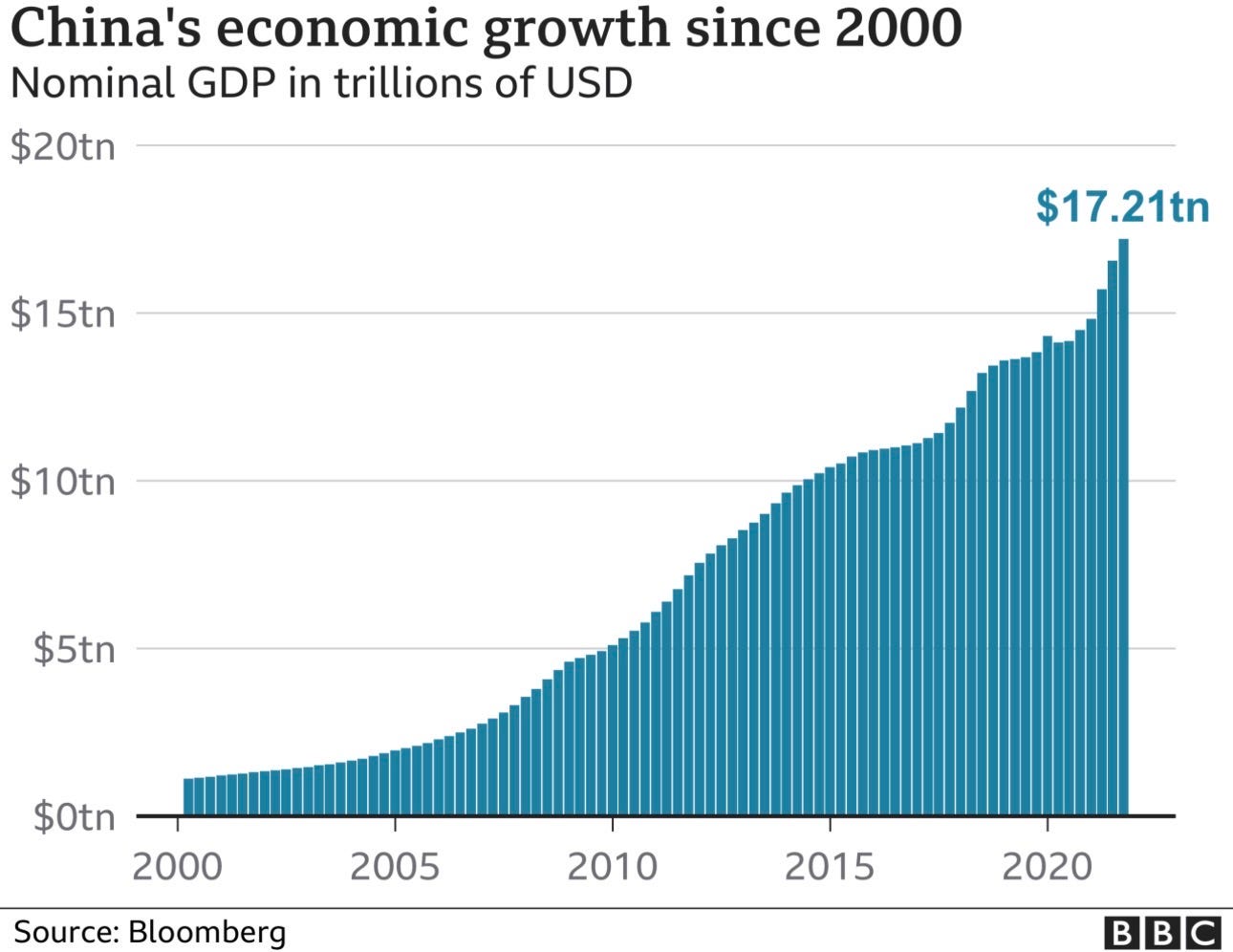
Today's holders of the Mandate of Heaven are burning the very boats that are carrying them across the trading oceans as they slowly destroy the system we built together. That's going to hurt us all, and sooner than most are willing to admit.
It's clear why. China's growth works because suppressed household consumption at home, combined with vast overinvestment in production, means Chinese families capture too small a share of what they produce, so factories churn out far more than their domestic markets need. The surplus is dumped abroad with state subsidy behind it to make it more than competitive. Electric cars, solar panels, machinery, and steel are all dropped on buyers in Europe who enjoy, briefly, the luxury of cheaper goods.
But this isn't the end of the process. The inevitable result is the closure of Western factories and growing struggles to keep up with Chinese advances in technology and production. So the result is not free trade, it is mercantilism with Chinese characteristics: trade used to create dependency and eliminate competition.
Some say Beijing is the master at long term thinking and this is a master strategy. I'm not sure. It reminds me of a conversation I had years ago in Cameroon, when a businessman explained to me that anyone who was not stealing from the company was a fool. Corruption was so complete that if you didn't steal it would make no difference: every business would fail, that was a given. The only question was whether you got your share before it did. That's the same short term result we're seeing from Beijing.
After just 25 years, and barely a decade since many Chinese families started to feel the benefits of wealth, we're already seeing the predictable and predicted response of tariffs, anti-dumping probes and friend-shoring as countries try to build supply chains that bypass Guangzhou. That will cost China very dear. Instead of the win-win policies Wang Yi so often quotes, this is lose-lose, with China's people set to lose the most of all, because Beijing treats the trading order not as a shared body to nurture but a carcass to strip, extracting everything it can before the collapse it's doing the most to make happen.
The more it floods our markets and displaces our producers, the faster the barriers will rise and production shifts elsewhere. And while that will cost us, we can adapt. Beijing's entire deal with its people is that prosperity replaces participation in government. That prosperity depends on Western consumers keeping factories busy. If today's emperor, Xi Jinping, burns the bridges that connect those plants to our people he risks that deal, and that risks unrest in China. That's not strategy but a race to the bottom.
Finally we are beginning to see it. The cheap Chinese goods that felt like a quick win for consumers, keeping down inflation as costs fell and quality rose, masked the true cost: industrial competence, skilled work, and the ability to make critical goods at home were all disappearing. Without our manufacturing base we won't just depend on Beijing for widgets but for everything we need to defend ourselves. This stopped being an economic question some time ago, and it's made clear in Ukraine and the Gulf.
Kyiv is building a defence industry at wartime speed precisely because strategic dependence meant it was under the control of others, including some who sided with Moscow. We've got no excuse to ignore the lessons we're seeing every day.
Which brings us back to the Kenyan bush and Nanyuki.
Because let's be honest: Kenya wouldn’t have done this if Britain were still its industrial partner of choice, that’s changed. The railway from Mombasa to Nairobi was built by Chinese firms with Chinese loans, and Beijing is one of Nairobi's biggest lenders and traders. When your economy speaks quietly, your soldiers get shown the door. Trade and defence are not separate files in separate departments, they’re the same conversation, and we’ve gone quiet.
Our defence relies on some basics done right: trained battalions, defence agreements, trusted allies, and capable industry.
The row with Kenya can be fixed, but fixing it means we need ministers who recognise that this defence relationship with a vital African partner is a first-order priority rather than an administrative inconvenience; and that the rules we wrote for the WTO don't create a feeding trough for those who ignore them, and only work if we all enforce them.
We know what quick wins really cost. Russia is showing it in the three-week operation now in its fourth year, and China is playing the same game at global scale. It's long past time to call it out or we will be left with a straightforward choice: either we rebuild the rules of the WTO that allow the shared prosperity once dreamed of; or we rebuild our industrial sinews, protect the sectors on which our security depends, and watch the trade routes that have made China rich and strong wither. The handshake in Manila suggests nothing has changed. The training in Kenya proves everything has.
🌞
In life I avoid people who think they can take the P out of me, family friends and others all alike , and I cease to trust them. Leave Kenyans, who enjoy killing each other wholesale from time to time, to their new pals. The Chinese do nothing for free out of their kindness and generosity. Every Kenyan is a potential Uyghur or Tibetan for them to exploit and subjugate. Kenya’s history is a litany of government corruption and they richly deserve the leeching Chinese. Uhuru Bwana Gor blimey!