


The first recorded honey trap led to a haircut. Samson was undefeated in battle but swooned before Delilah, who snipped away while he slept. With his locks went the secret of his power.
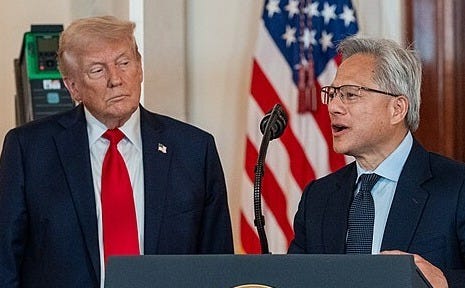
Jensen Huang’s power lies not in his hair, nor even in his trademark leather jacket, but in the sand he has taught to think. As founder and CEO of Nvidia, he took the bet that gaming would be displaced by artificial intelligence, and that gamble has paid off. His company is worth $4tn, but the money was no defence. Like Samson, he has confessed to a weakness as old as time.
On Sunday Huang told staff he had been unfaithful to his wife. What could have been a personal indiscretion took on a whole new angle because this generation’s Delilah – Alice Huang (no relation) – works at Megaspeed, a Singaporean firm which may have been breaking trade bans by siphoning Nvidia chips to China.
A report in the New York Times alleges that China’s ministry of state security, the Communist state’s intelligence agency, recruited her, possibly after the relationship had begun, to collect bytes of pillow talk on Nvidia’s most advanced processors and tempt him to urge others to lift the obstacles to Beijing getting the silicon wafers direct.
China’s government calls this slander, but then it would say that, wouldn’t it?
According to the New York Times, the president was told months ago, yet both Huangs (he and she) were oblivious to the operation following them until this weekend.
Why a hostile intelligence agency would go after the billionaire founder of the most politically important manufacturer doesn’t require much explaining. Every product that’s changing the world, or threatening or protecting the future, seems to be built on an Nvidia chip.
Their design means that the processors do the maths that fool us into believing computers can think. Large language models that power the chatbot on your phone and the systems that read satellite imagery, or combine sensor data and weapon-targeting systems, are trained and run on thousands of them wired together. These are the data centres that drew the ire of American voters as they drain the US grid and are being assembled in the Gulf and, more slowly, Britain.
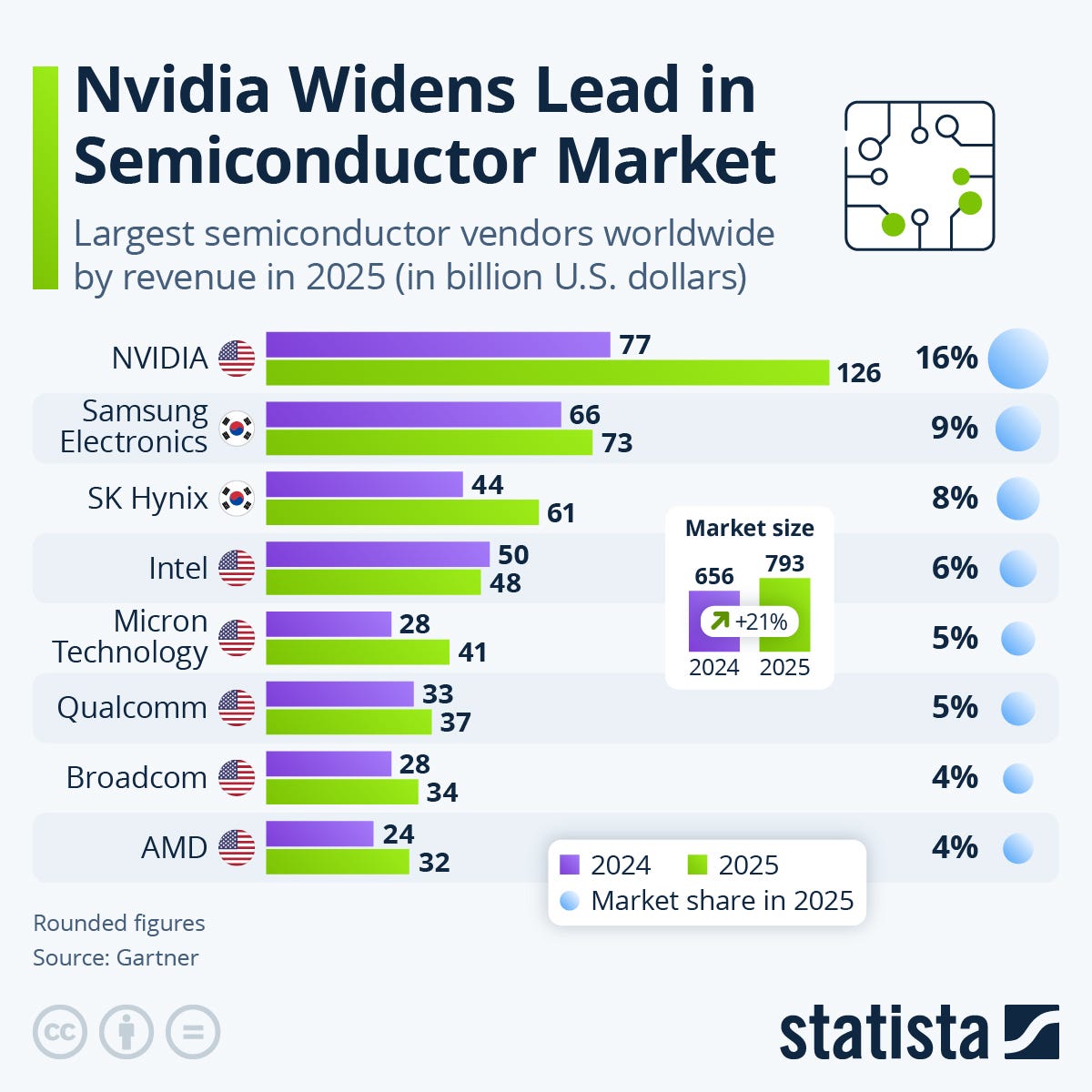
It’s becoming increasingly clear that whoever commands these wafers and trains their models faster will pull down the walls of the temple on the past and code a very different future. That’s why Washington has banned the sale of the most capable chips to China since 2022. Unsurprisingly, Beijing has been looking for ways around those restrictions.
The first prize of this alleged intelligence operation is the chips themselves, and there are plenty of ways to get them. It’s reported that a Malaysian sister company of Megaspeed bought at least $4.8bn (£3.8bn) of equipment containing Nvidia chips between June 2024 and February 2026, which US inspectors found still boxed up, not installed. The accusation is that they were never intended for use, but for onward delivery. Megaspeed denies this.
Smuggling buys time for Shenzhen-based chip foundries to catch up, but that’s not the only benefit that a friend could get from a night with Jensen. Huang is one of the best-connected people on the planet, regularly spends time in the White House and talks often to the US president.
Huang has already been a powerful advocate for loosening controls on China’s purchase of Nvidia chips. He secured a deal that gives the US government a cut of the revenue on the chips it allows to be sold to China. Of course, that’s directly in his interest already, as competition for his product will only drive up the price, but from Beijing’s perspective every little helps.
Third, even if you don’t know what’s in the chips, knowing who’s ordering them helps you to know what they think. Are they being sold to power Patriot interceptor missiles, or are sales to Anthropic or OpenAI speeding up or slowing down? Every invoice tells a story that’s helpful to those competing in the open market or in the secret geopolitical race that has got hotter in Ukraine and the Persian Gulf.
And then, of course, there’s Taiwan. Huang himself is from the territory that makes so much of the world sing with the chips made by TSMC, where Nvidia’s designs are made real. It’s no surprise that Beijing is interested in the island’s most famous son.
And what’s the downside? If they succeed, they get more chips and possibly the codes and secrets that power them, and if their cover is blown, the premature ejection of a CEO could interrupt the production of chips at the world’s most advanced manufacturer and give China’s own firms a little more time to catch up.
This isn’t just a spy story; it’s about China’s approach to the whole world. Beijing doesn’t see the military and industry as separate worlds, or separate struggles; they are all players in the same game, and one the Communist Party intends to win.
Under Article 7 of the 2017 National Intelligence Law, every Chinese company, student and citizen is obliged to assist the Communist Party when asked, so even if Alice Huang began her fling in a passionate embrace, to the ministry of state security it was just another opportunity.
What the American investigators discovered and the New York Times reported is a story as old as time. What Jensen Huang discovered is that, for all his strength and power, the greatest threat to his future is himself. The ministry of state security may have found a weakness and exploited it. It will certainly employ such tactics in the future. After all, honey is sweet and we all have our weaknesses.
If a man could keep it in his pants, and stay faithful to his wife and family, there would be no need of warnings.
Thanks Tom, always good to read level headed analysis