


There aren’t many reasons for Americans to visit Moscow today. Red Square lacks the glamour that the first Pizza Hut and McDonald’s gave it in those days of optimism and openness that followed the Soviet collapse. Visitors today only go with a warning.
In 2021, Bill Burns, then head of the CIA, cautioned the Kremlin that the full-scale invasion of Ukraine would be a disaster. It would fail and leave President Putin’s regime weaker. He was right.
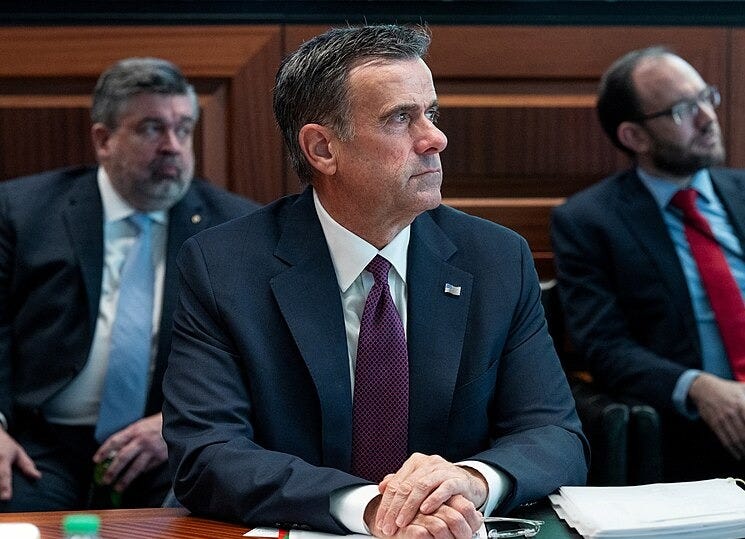
His successor, John Ratcliffe, has just flown out of Russia having, according to former Deputy Director of US National Intelligence, Beth Sanner, delivered a similar message, this time about a planned attack on NATO. “We know what you are going to do, and you’d better not do it,” she’s reported as saying in the Wall Street Journal.
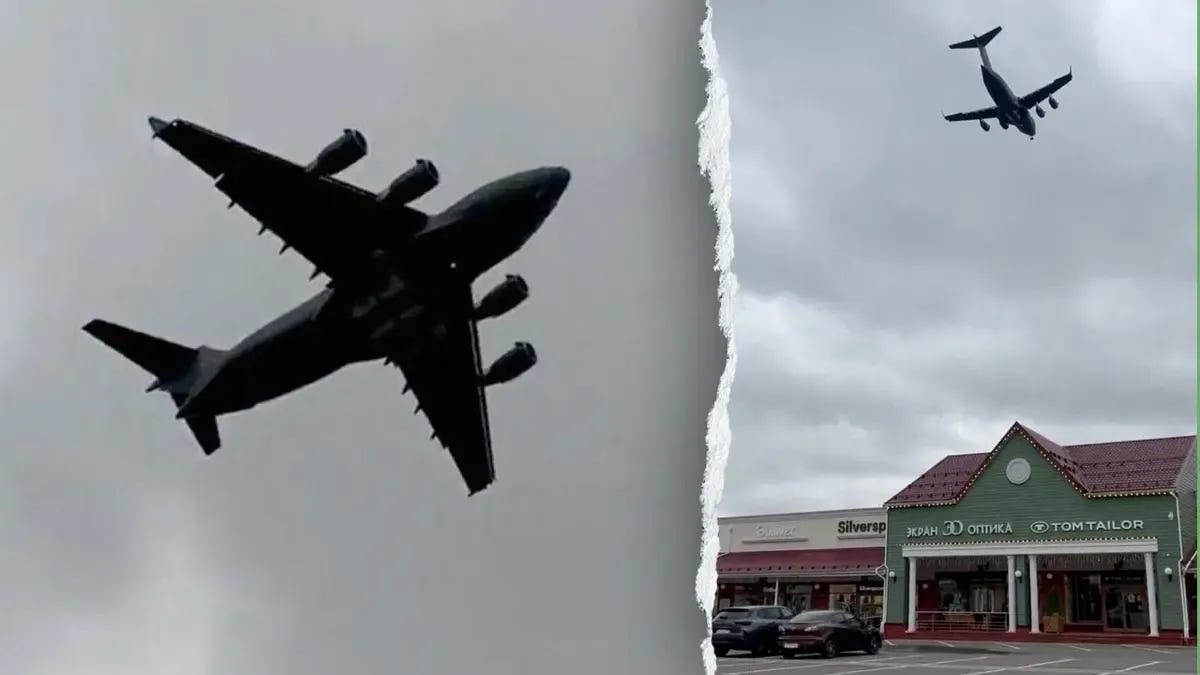
The question Putin will be asking is: why not? Looking around the world, it’s hard to argue that he either has much choice or is facing as much opposition as he should.
Let’s start at home.
That strip of water that we claim as the English Channel should protect us from the envies of less happier peoples, but it’s a highway for infiltration by those who go round our borders. Russia knows all about this. Not only have they weaponised migration from Belarus into Poland and the Baltic States, but they’ve encouraged the traffickers who have profited from migration routes across the Sahara.
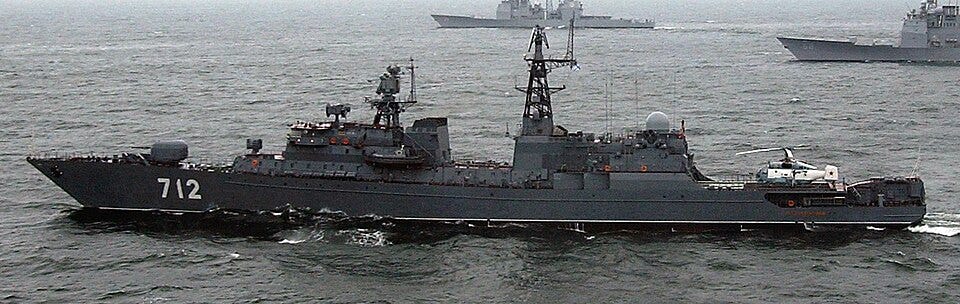
And that’s not all. A few weeks ago a rust-bucket of a Russian warship tested its guns off our coast. In international waters, sure, but still a threat if ever I’ve seen one. And what did we do? We watched. No wonder Putin’s feeling cocky with us and his former deputy foreign minister Andrei Fedorov has threatened a military response to our support for Ukraine. They see us as a soft target.
Look south and things don’t get much better. France is in the fin de siècle moments of the Macron administration with a divided left and a disappearing centre a Le Pen presidency looks ever more likely. After taking loans from Russian banks and repeating some of their propaganda in the past, how firm do we think a National Rally response would be? How long could it last?
And then there’s the rest.
At least France is capable and French soldiers have shown they can, and will, fight. Many other European NATO states can’t and some member states claim Russia’s threats, their sabotage, intimidation and terror against European countries is nothing to do with them. That’s rubbish. Article 42(7) of the EU’s Maastricht Treaty commits them to help their fellow member states “by all means in their power” if any of them are attacked. That’s a more than NATO demands. Those who claim neutrality are nothing of the sort, they’re just defenceless.
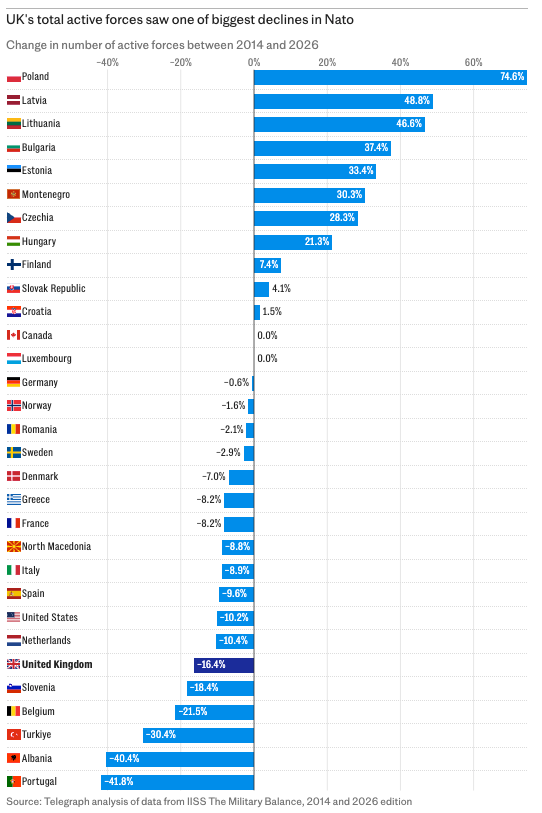
Geography is the only driver of preparation. Those nearest Russia know the reality of the threat and are preparing to face it. Poland has raised defence spending to some 5 percent. Sweden and Finland never disarmed and didn’t believe in the peace dividend after the Cold War. Estonia is offering every citizen the chance to train as drone pilots and others are playing their part. But if you’re looking out from the Kremlin, that still leaves a large flank, and as the Ukrainian drone pilots have shown, multiple targets that can be hit at range, including British power stations and military sites.
After all, who are you really testing? Not Warsaw but Washington. That’s where the questions lie.
For now, forget the politics. Forget for a moment, if you can, that President Trump has threatened to leave the alliance that has kept the continent safe and guarded the United States’s most important market for 80 years. Forget that US generals and admirals, intelligence chiefs and former cabinet members have raised concerns about American commitments. Ignore the withdrawal of troops from South Korea, the questions over deployments in Japan and the reinforcements in the Middle East. Ignore the noise and fury signifying so much, just look at the numbers.
In the Gulf the US has fired so many missiles that the shortages are beginning to show as the economics of war work against us. Not just in that theatre, but across the alliance. So much so that countries that bought US Patriot missile defence batteries have now created a market. Greece has rented its system to the Saudi government putting hoplites in the Arabian desert for the first time since Xenophon.
It’s not just about stocks, but supplies. Where are the next weapons coming from and who will make them? If you’re Russia, it’s clear. China has sustained your war in Ukraine since the beginning. They’ve shipped chips and sensors, chemicals and explosives, motors and materiel from their own factories, and from your North Korean allies.
In response, Kyiv and Tehran have both shown that you can take a pounding but with cheap, easily built drones, you can not only survive, you can fight back; continuing to make weapons for thousands while your enemy spends millions.
If you’re Putin, what would you do? You’re already staring at the likelihood of defeat in Ukraine, you’ve lost a million dead or severely wounded, and now drones are striking targets in Moscow and St Petersburg, and fuel shortages in a country have made it clear that even Russian propaganda can’t hide the defeat anymore. But what can you do? If you quit, what are the chances of a quiet retirement in a dacha by the sea?
Putin wouldn’t even make it to the door of his office. And the palace coup would likely not stop there. Family and connections (he has no friends) would be murdered before the succession was settled. His only choice may well be to roll the iron dice, for him it couldn’t be worse and he doesn’t care about Russia.
What does that mean for us? The timetable is shrinking and the need to be ready is urgent. When Defence Secretary John Healey resigned saying 3 percent of GDP on the military wasn’t enough to keep the country safe we expected him to push for more now he’s in charge of the cash. Instead, the current target that the now-Chancellor Healey has funded is billions of pounds shy of his own target and he’s said he has no plans even to look at changing it until the Spending Review in the Spring. It’s making his departure from Sir Keir Starmer’s government look more like political game-playing than the principled resignation it first appeared.
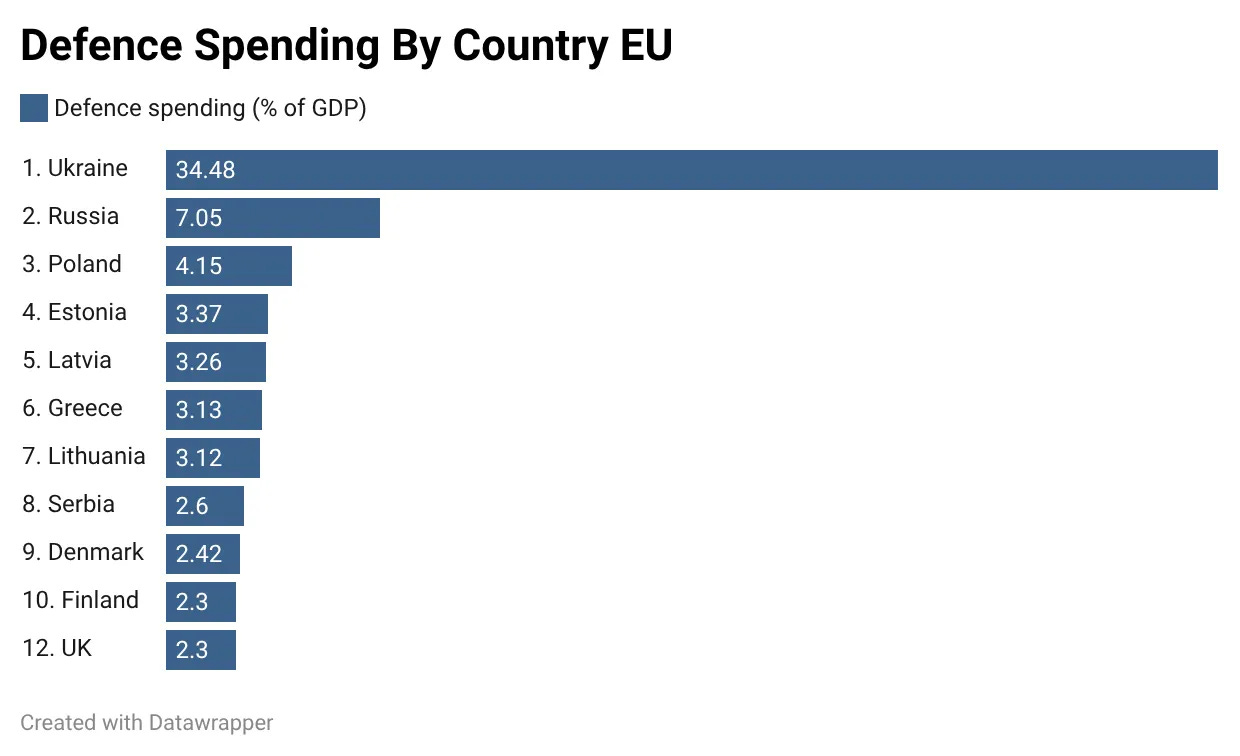
I hope I’m wrong, but hope is not a policy. We know that Putin has consistently seen Britain as the eternal enemy. He sees us as the all-powerful intelligence-led Machiavellian geniuses who tricked him and constrain him. I only wish we were. That has put us in his crosshairs without the capabilities we need to push back. We’re running out of time to be ready.
We need urgent improvements to our drone defence, they could be launched from unmarked containers on ships in the North Sea, or unwittingly by a truck driver in northern France and still target our critical national infrastructure.
We need more ships at sea and the crews to ensure they’re operational. And we need the aerial defence that has flown from airfields in Kent and Lincolnshire to keep us safe before.
We won’t know whether Putin listened to Radcliffe’s warning until it’s too late; that’s why Britain needs to act on it today.
“Hope is not a policy” is such a good summary. I think one of the hardest things about risk is having to make decisions before you have certainty. Knowing when the warning signs are serious enough to justify acting, especially when the threat might never materialise, is the really tricky bit.
“Hope is not policy” is very good. Unfortunately for the British an outsiders prospective is you are doomed. Failed by the suicidal social policies. Britain has been less weakened less by external threats than by domestic policy. The Putin regime simply just has to wait the British out. Who wants to man the ships? Who wants to drive the trucks? Who wants to pilot the drones? What’s the incentive? What are they fighting for exactly? If you think this doesn’t matter or play into the chess game being played, barking your dogmatic national security concerns from the top of your tallest church steeple I would look down, the fires at your feet, same as it’s been for others recently.