


Armies go on operations, but it’s nations that go to war. That means industry, academia, in fact, the whole of society – not just the military. At present, our divided society is our greatest vulnerability.
We are seeing our freedoms exploited every day to destroy the trust that holds us together, but too few of us are facing the reality of the challenge that our enemies are massing against us. We have chosen not to believe in the devil, but as we see every day in Ukraine, and particularly in the massacres of Irpin and Bucha, he is alive and walks among us. Evil exists and we need to be ready to fight.
What we have seen consistently not just under Vladimir Putin but under Russian rulers for centuries is the violent ambition of the tyrant. They have murdered millions and tortured more. Again and again we have seen a corrupt princeling in Moscow look with envy on the successes of the free nations of Europe and suffered the violence that has followed.
That’s the reality frontline states like Finland, Poland and the Baltics have always known. In London and other capitals, some grew comfortable and complacent. The nations of Eastern Europe never did. Estonia and others in the region have been carrying their share of the burden this whole time.
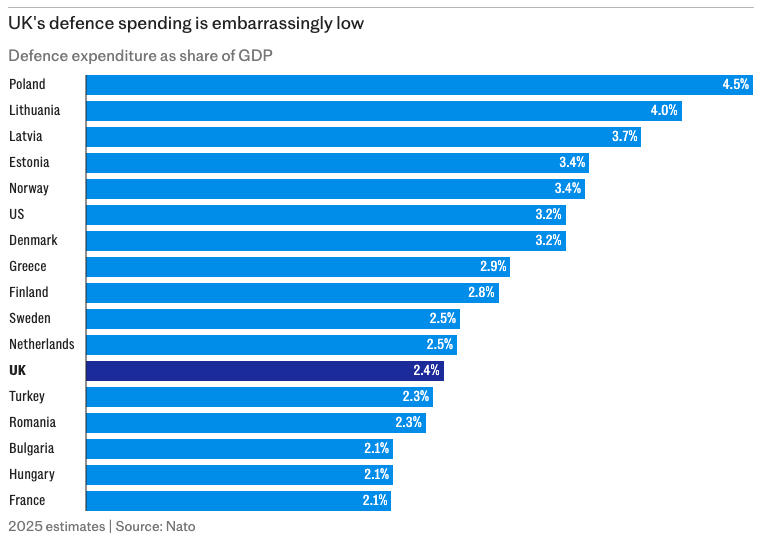
Tallinn spends some 3.4 per cent of GDP on defence today and has committed to spending 5.4 per cent from 2026-2029. And its neighbours have done the same: Poland is at 4.5 per cent today, rising to 4.8 per cent next year. Latvia is at 3.7 per cent, and Lithuania is at 4, having committed to between 5 and 6 per cent from 2026.
Then of course there is Finland. Outside the alliance until recently, Helsinki has never forgotten what it took to stop the Soviets and has never dropped its guard. When they joined Nato, they didn’t just add to our security, they brought an attitude and approach we in Britain need to learn from. And, along with Sweden, they shifted the alliance north – reminding me of the bonds we shared in the past under Viking kings or Hanseatic treaties.
The threat we face
For years now, Russia has been conducting warlike acts against every European democracy, trying to undermine our freedom. We have hidden behind diplomatic dances and weasel words because honesty would have forced us to make choices we wanted to avoid.
I’ve had enough of the obfuscation and evasion. It’s time to say it clearly: the Kremlin is at war with Europe and its allies in Beijing are helping. The evidence is clear.
In 2006, the FSB murdered Alexander Litvinenko in London using a chemical so toxic traces from it were later found at more than 40 sites across the city, including on the British Airways flight his killers flew in on.
In 2016, Russian military intelligence plotted to seize the Montenegrin parliament on election night, assassinate the prime minister, and install a pro-Russian government to halt the country’s accession to Nato.
In 2018, the GRU poisoned the Skripals with a nerve agent in Salisbury. The perfume bottle they left behind still contained enough Novichok to kill a British mother-of-three. In fact, if it had been raining and the bottle tipped into the water supply, it contained enough to kill thousands.
And in 2024, the Kremlin spent more than $200m – the equivalent of one per cent of Moldova’s GDP – on interfering in the country’s presidential election and EU referendum. President Sandu has said her government has evidence that 150,000 votes were bought, with the target having been twice that number.
That’s not all. That same year, the GRU sent incendiary devices disguised as pillows through the DHL network. One caught fire in a warehouse in Birmingham, another at a hub in Leipzig. German intelligence said the only reason a cargo plane didn’t come down over Europe was because the flight had been delayed.
Germany also faced more state terrorism in 2024. US and German intelligence disrupted a Russian plot to assassinate Armin Papperger, the chief executive of Rheinmetall, Europe’s largest producer of artillery shells. He was one of several European defence industry executives on a Russian target list.
The record in Estonia is just as serious. In 2007, it was the first Nato member subjected to a coordinated, state-directed cyber-attack when three weeks of denial-of-service operations targeted ministries, banks, and broadcasters.
And in 2014, Eston Kohver, an Estonian Internal Security Service officer, was dragged across the border by FSB agents and paraded on Russian state television before being sentenced to 15 years in a penal colony.
But many have barely responded to Russia’s violation of our sovereignty and threats to our peace. Time and again, the alliance barely moved. We expelled a few more diplomats. We imposed a few more sanctions. We issued a few more statements. Usually, Moscow barely noticed and saw us as easy to push around.

Complicity at home
In 2014, France’s Rassemblement National party took a loan from a small bank in Moscow after other European banks declined to lend to it. When the bank collapsed, the debt was passed to a Russian aviation company that the German Marshall Fund’s analysts have linked to Russian intelligence. A French parliamentary committee subsequently found that the party had operated as a relay for Russia in French politics.
In 2024, Moscow so corrupted the Romanian elections that the first round of the presidential polls had to be annulled when its agents got an unknown candidate within touching distance of the presidency. Russia didn’t do that alone. It was a coordinated TikTok and Telegram operation with China’s hands all over this new online army.
They have been helped by useful idiots and corrupt co-conspirators. Former German chancellor Gerhard Schröder joined the boards of companies used by Putin to rob his own people and bribe ours. Former Austrian foreign minister Karin Kneissl abased herself with the deepest curtsey to Putin at her wedding and now degrades herself propagandising for Russia.
In Britain too we have our own traitors. Shamefully, the former leader of Reform UK in Wales got more than 10 years in prison for spouting the Kremlin’s rubbish for cash.
Vladimir Putin hopes to convince our fellow citizens that we can’t trust each other, that our democracies can’t protect us, and that we’re all the same. You have to admit, he’s doing better than any of us would like. That’s why the truth matters. It’s what sets us apart from Moscow.
Learning from Ukraine
The war we see being fought in Ukraine is still not the war we are preparing for. Not just in our defence ministries, but in our wider society. We are integrating the lessons too slowly and not alerting our people to the realities of modern conflict.
What Ukraine has achieved is not a procurement story, but a lesson in national mobilisation. It has produced drones cheaply and at scale, redesigning them in weeks not years, with software updated by civilian programmers and factories in homes and barns across the country. Kyiv has shortened the feedback loop so the link between a frontline platoon commander and the start-up founder equipping him runs in hours, not months.
And, again, the Baltic states, Sweden, Finland, and Poland have been applying these lessons faster than anyone else in Nato. The Estonian defence industry has expanded beyond recognition in three years. Companies like Milrem Robotics, Frankenburg Technologies and Threod Systems are now exporting capability to allies that a decade ago would not have known where to find Tallinn on a map.
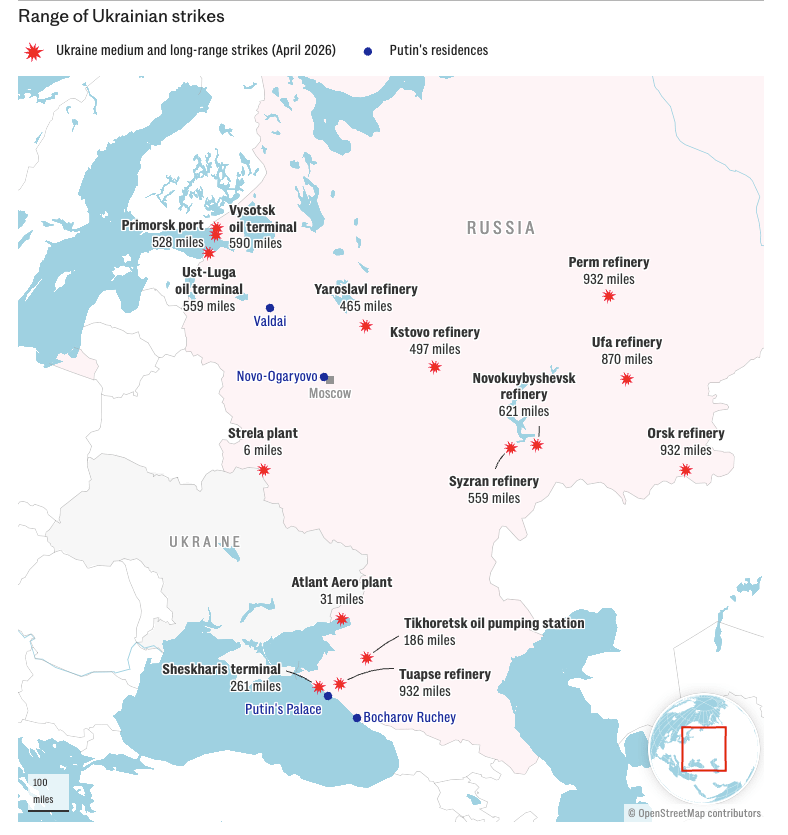
Estonia is also upgrading how it thinks about war. Only last month, the Estonian government cancelled a €500m programme to replace its infantry fighting vehicles and redirected the money to drones and air defence. It looked at Ukraine and drew the obvious conclusion.
Meanwhile, in London, it’s reported the Ministry of Defence has pushed through a helicopter contract when the Army wanted drones. That’s not good enough.
We need to be like Poland, and break old supply chains building newer, faster and getting what we need. Poland went to Seoul for tanks because Berlin and Paris could not match Korean delivery times. The K2 line builds 180 tanks in three years. The German Leopard 2 line takes five years to build 50.
Mass at speed has always beaten the exquisite and slow. Re-engaging our home-grown industries is vital for resilience, but what matters most is people. Sweden has sent a pamphlet titled “If Crisis or War Comes” to every household – twice. Like Taiwan’s version, it includes an important warning: don’t believe enemy rumours, and don’t repeat them. Again, they understand the power of lies. So does Putin and so does China’s Xi Jinping.
Finland trains its civilians through structured courses they can fit around their working lives. And Estonia has built the digital infrastructure to keep the basic functions of citizenship running even under occupation.
If citizens don’t know where to go and what to do should the worst happen, you’re not preparing for a crisis, you’re ensuring chaos. As Kyiv shows, the price of conflict is so much higher than the cost of deterrence. Ukraine didn’t have a choice. We do.
Britain’s complacent Government
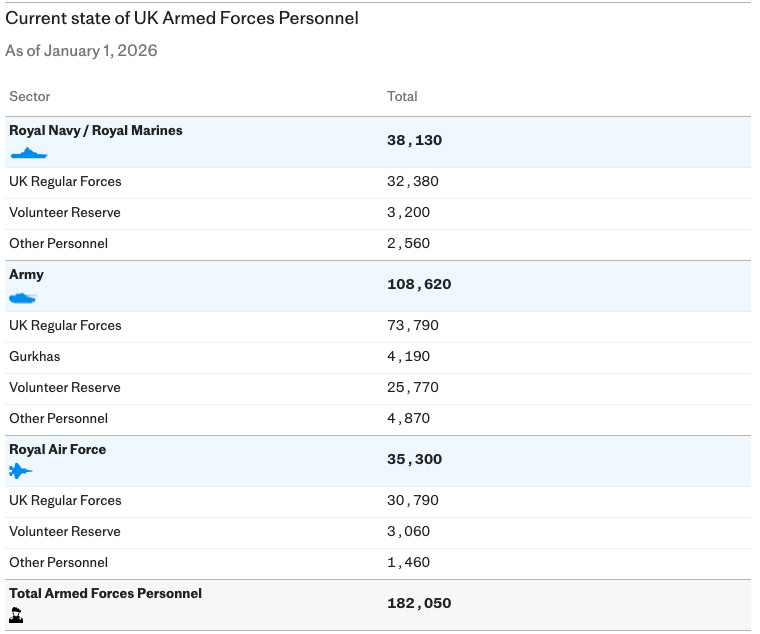
The obstacle isn’t the British people. Last year more than 170,000 young Britons applied to join the Army alone. Fewer than 10,000 made it through. We needed more. We do not lack for interested, motivated young people who want to serve our country.
As Major General Nick Cowley, the commandant of the Royal Military Academy Sandhurst said, the claim that there’s a snowflake generation is absolute rubbish. But there are signs even our Government is finally waking up.
Legislation currently before Parliament proposes to raise the recall age of service personnel to 65 and lower the threshold under which reservists can be called up. Both are welcome. But we need to go further.
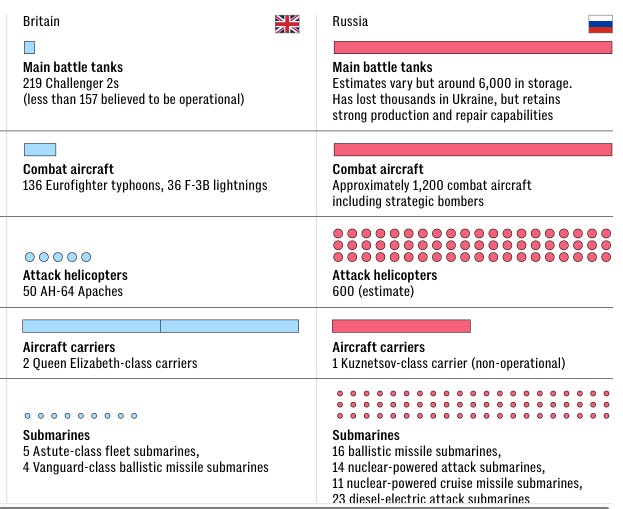
Around 95,000 people are on a contingency list, including me, ready to be called back to duty if needed, but you can bet it’s not up to date. The practice of staying in touch with them, of knowing where they are and what they can still do, fell away after the Cold War ended.
In Britain, national service is something of a dirty word. We have only forced men in uniform into war, but what if we looked at the problem differently? What if we asked young people what they could do to help their families, their communities, their country?
Military service may not work, but public service could bring the country together and ensure we are ready. With youth unemployment rising, AI taking jobs (or so it’s said) and many asking for work experience to show a future employer, a year or two of structured service in which a young person could choose the Army, the health service, fire and rescue, agriculture, the local council or civil defence work could make a difference. Such a scheme would be especially attractive if it came with a discount on university fees or other support.
Today, Britain leads the Joint Expeditionary Force, but that leadership has been more in name than in fact. There are roughly 1,000 British troops in Estonia today, rising over the next five years to about 2,000. Given the threat we face, and the lessons in drones and mass the Russians are learning in Ukraine, these numbers aren’t enough of a deterrent.
A serious contribution would mean a continuous rotation of British troops, in greater numbers, through Estonia, Latvia, Lithuania and Poland, backed by a reserve force worthy of the name. It could conduct joint exercises to prepare for conflict and deter.
It would mean training teams from Ukraine to help us, not going to Ukraine to help them. It would also mean a revolution in production at home.
We need to get better at predicting the future. Defence demands intelligence and the networks to collect and share it. That once meant secrets and spies, today it often means open data and open minds.
Take one example. In 2018, volunteers with the organisation Bellingcat working from laptops at home, with no government help, identified the GRU officers responsible for the Salisbury poisonings. The information they used wasn’t classified. It was scattered across flight records, passport databases, hotel check-in logs and telephone metadata pulled from commercial services or bought on the dark web and sold by corrupt bureaucrats.
The Buk launcher that shot down flight MH17 was matched to a photograph posted to social media. Its crew was tracked through fitness app data. The route the convoy travelled was reconstructed from dash cam footage uploaded by strangers who had no idea what their devices were recording.
The core role of information
Like Sweden’s crisis handbook, we need to know that information and lies are part of the battle. We see it online and we know that TikTok and other sites are created by and exploited by our enemies.
Since the attacks in 2007, Estonia is already ahead. Its Cooperative Cyber Defence Centre of Excellence is formidable and Nato’s Strategic Communications Centre of Excellence in Riga does fantastic work. But we can build on that. We can support startups like Bellingcat and encourage citizen investigators to expose corruption and complicity.
We should create a new agency: MI7. While MI5 focuses on protecting our home, and MI6 on collecting vital secrets abroad. MI7 would exploit the sinews that connect and integrate those plots, helping to expose what is hidden in plain sight. Working with Estonians and Ukrainians, and other friends around the world, we would build a new network integrated from day one with civilian researchers, journalists and academics.
The US is right that many don’t pay their share to keep the peace for us all. It is easy for some in London to dismiss it as bullying, or as something about President Trump himself. It is harder to wave away when it comes from those allies who are already bearing the brunt of a threat.
If we want to lead, if we want to deter, if we want to stand with our allies and defend the border Nato has given us the luxury of pushing more than 1,000 miles away from our shores, we need to pay the bill and think again.
And we need to prepare our people, so that we can invest in the technology, the people and the skills to stand beside you watching across the Narva River and making sure the enemy doesn’t try to cross.
As I said, too many of us don’t believe in the devil, it’s easier to pretend he’s not there. But none of us can afford the comforts of childhood any longer. We are being attacked online and offline. People are being murdered and our politics corrupted. And the battleground is our people. This is war, just not as we’ve known it.
We need a new Northern Alliance, a new intelligence agency and cooperation, a new understanding of the threats we face and the urgency to deter them. We need to wake up and see what is clear and stand by our allies and rebuild the trust between us, and within ourselves.
It’s time to be serious again.
You should run MI7!
I read this piece on the day the Minister for Defence has resigned from government! As I understand it, the PM is unwilling and the Treasury unable to spend on our defence. The first rule of government is to defend its people! No point in spending on Net Zero if we have ceased to exist!
Thank you for this warning. It is a "must-read". I only hope the messages you present here, Mr Tugendhat, are heard and acted upon.